Available from September 2026

Freelance Senior UX/UI Designer
specialized in
multi-brand systems

Fourteen years across digital agencies and corporations. Designing e-commerce platforms and user environments that fit the design system, and the brand.

Based in Rotterdam, NL · Remote / on-site
01

DPG Media

Customer retention through smart offers

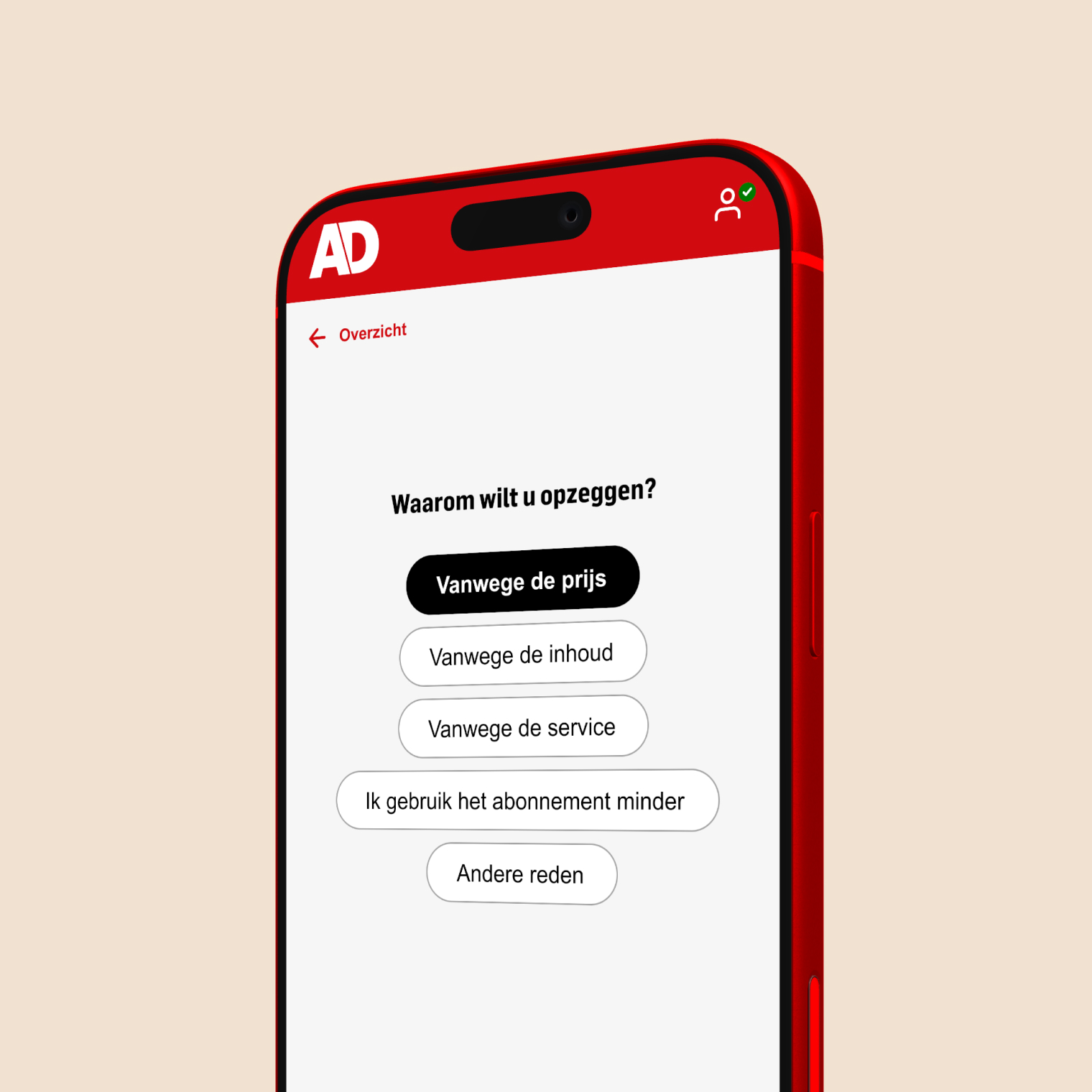
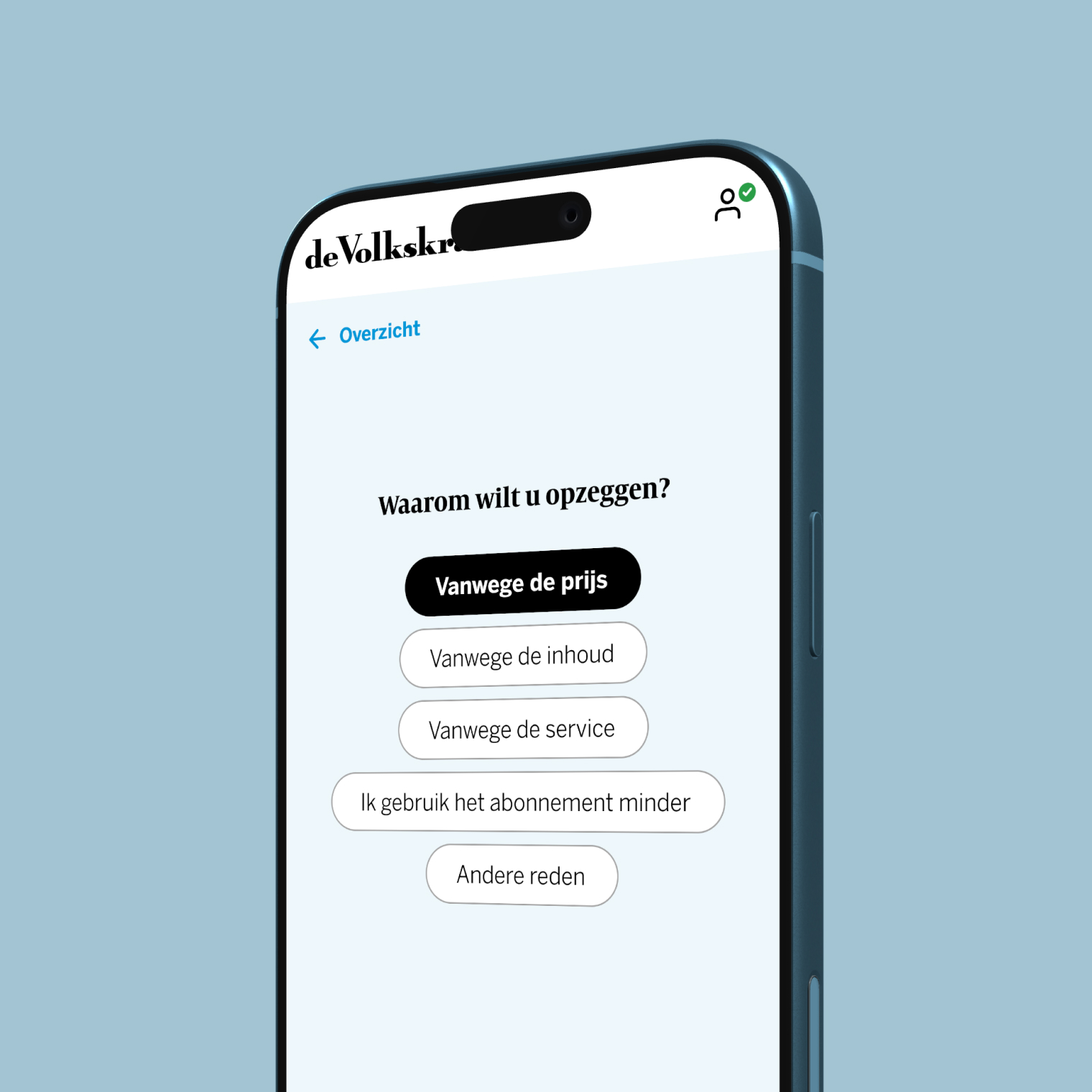
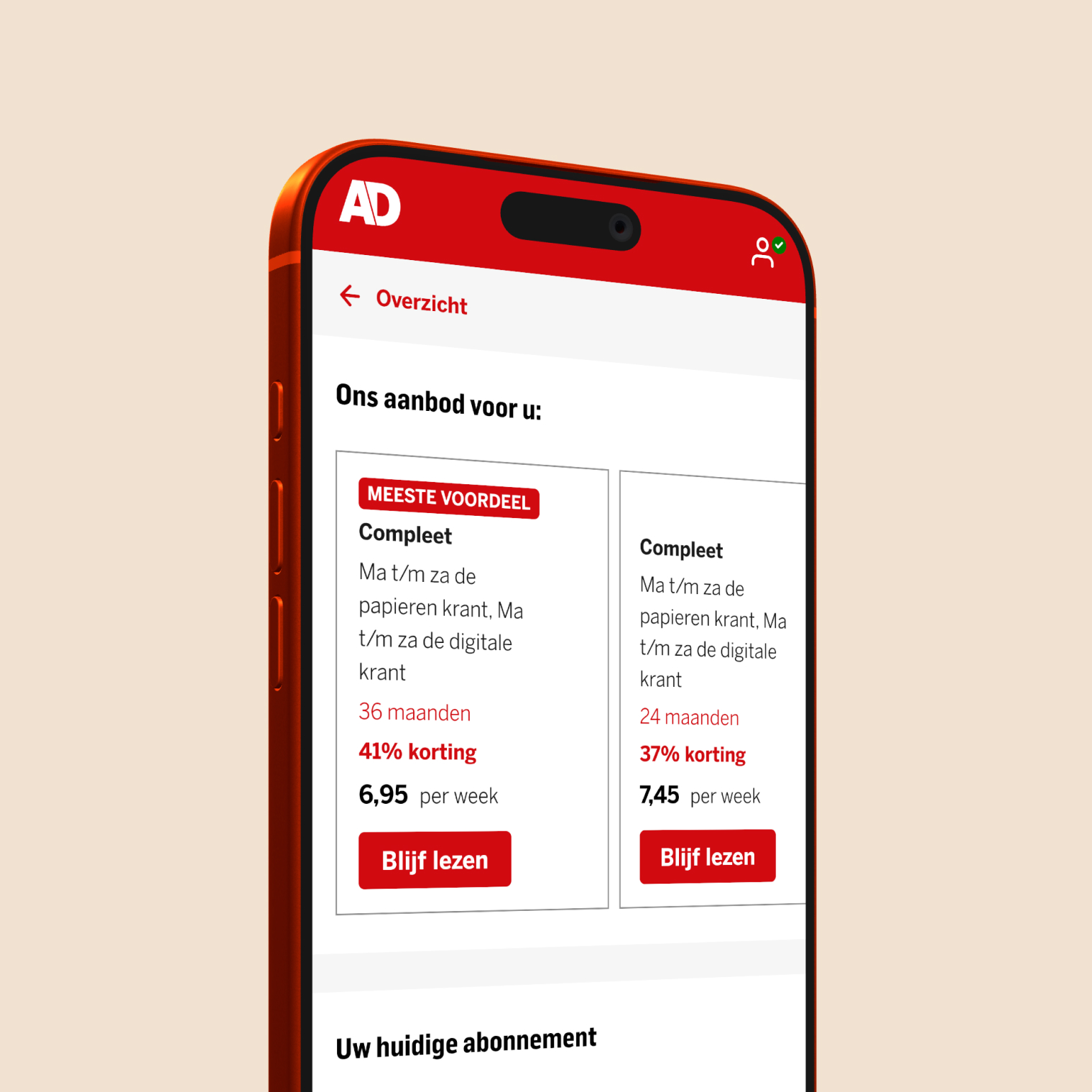
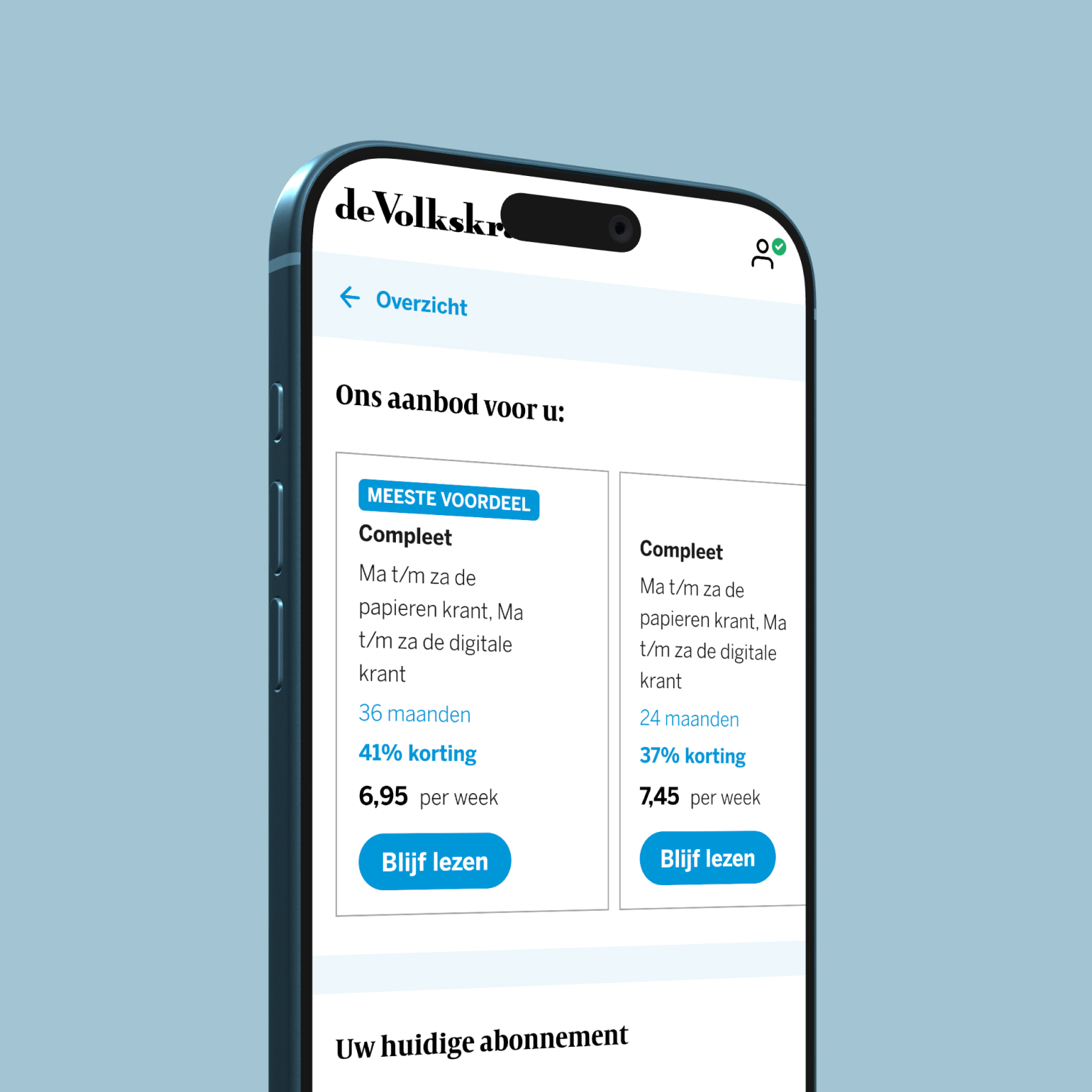
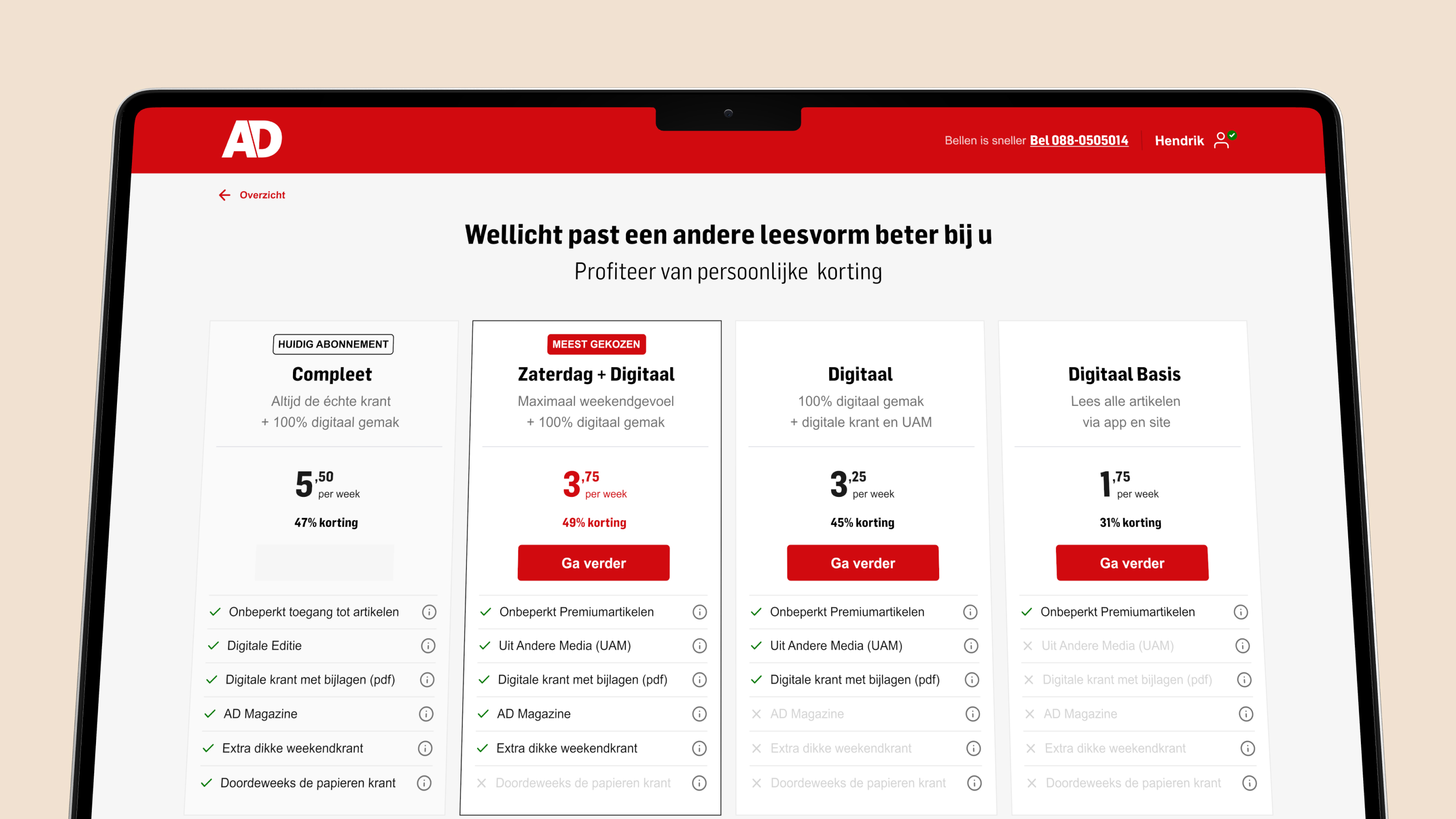
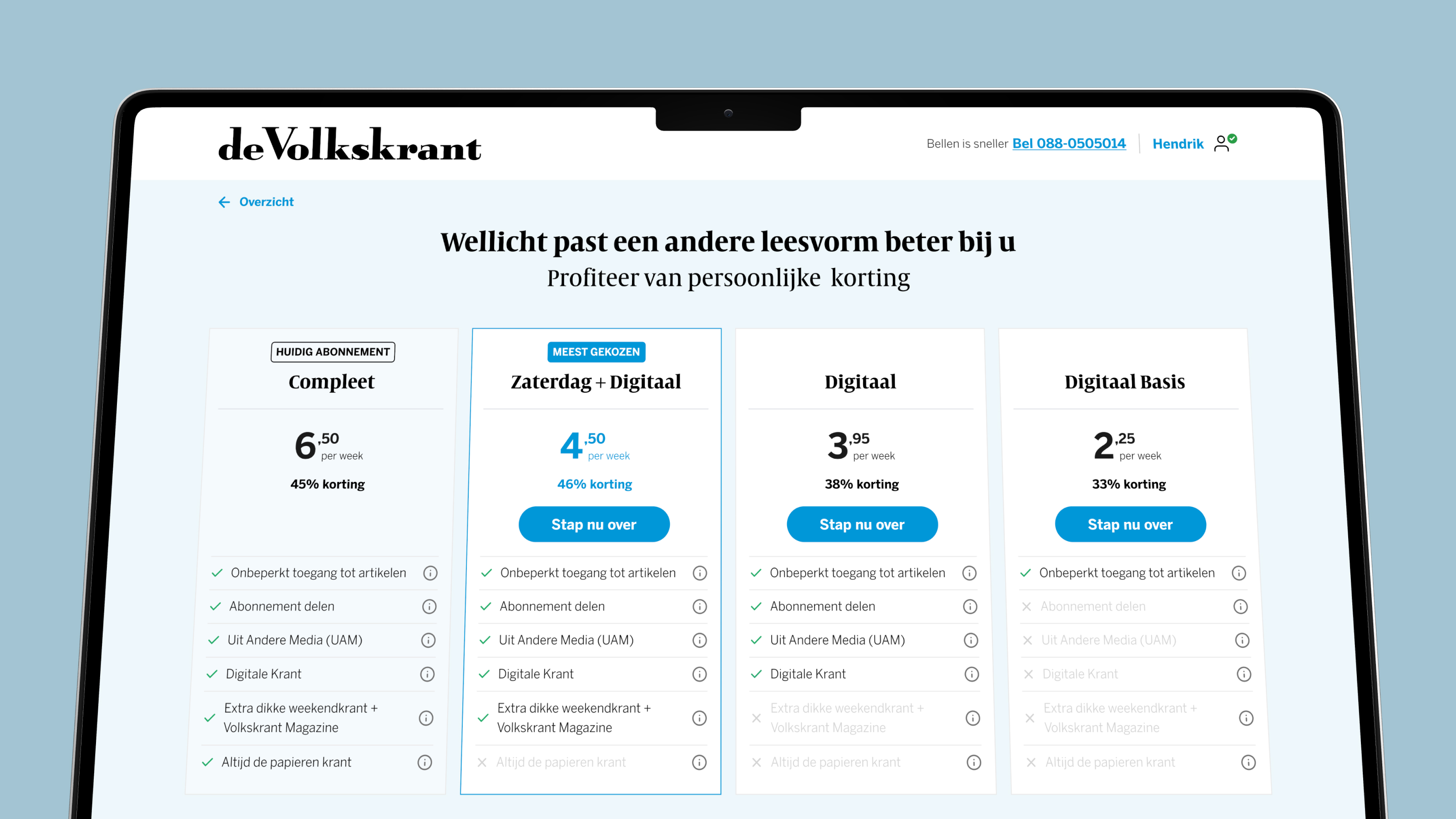
DPG Media's online cancellation and change flows were costing them subscribers. Customers who called got tailored offers; customers who clicked got dead ends. I redesigned both flows around one principle — the right offer, at the right moment, in the brand the customer already reads.

Context

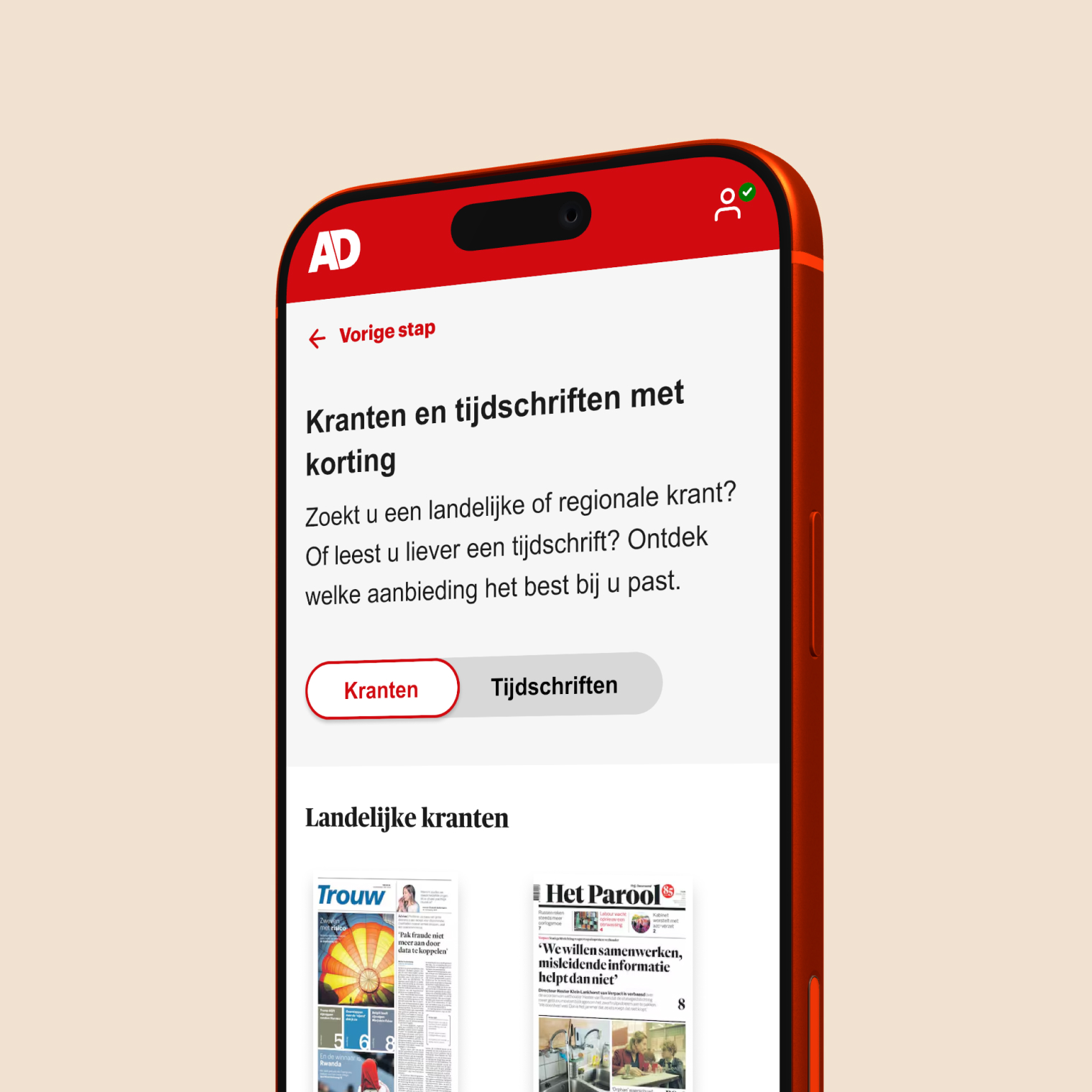
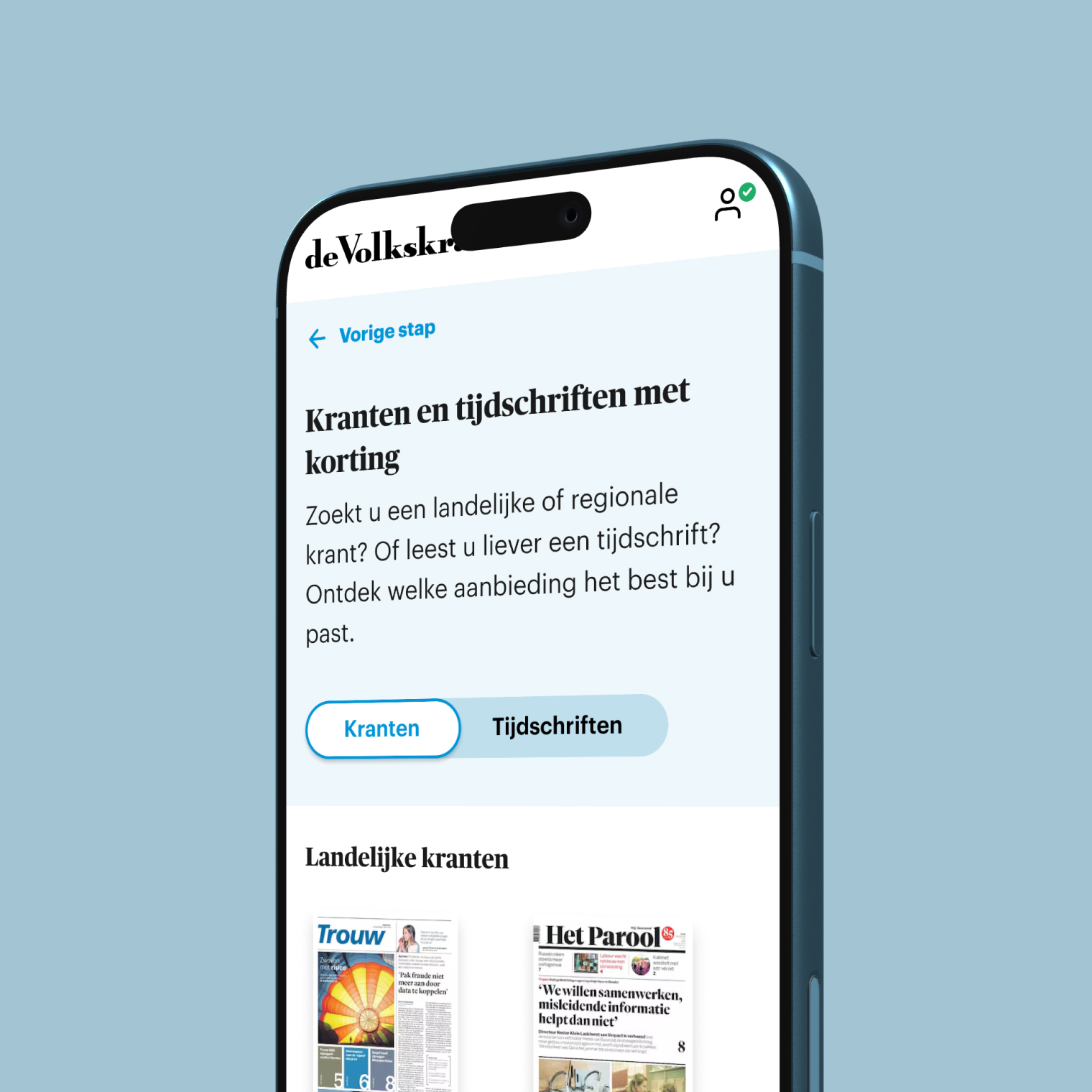
DPG Media runs more than 50 magazines, seven regional newspapers and four national dailies, including AD, de Volkskrant, Trouw and Het Parool. Each brand has its own cancellation and change environment — opzeggen.ad.nl, wijzigen.ad.nl and the equivalents for every other title. The pattern was the same everywhere: not mobile-optimised, alternative offers buried in collapsibles, and cross-brand suggestions completely missing. A Volkskrant reader on the verge of leaving never saw that Trouw digital might be a better fit. Conversion suffered. Retention suffered more.

Approach

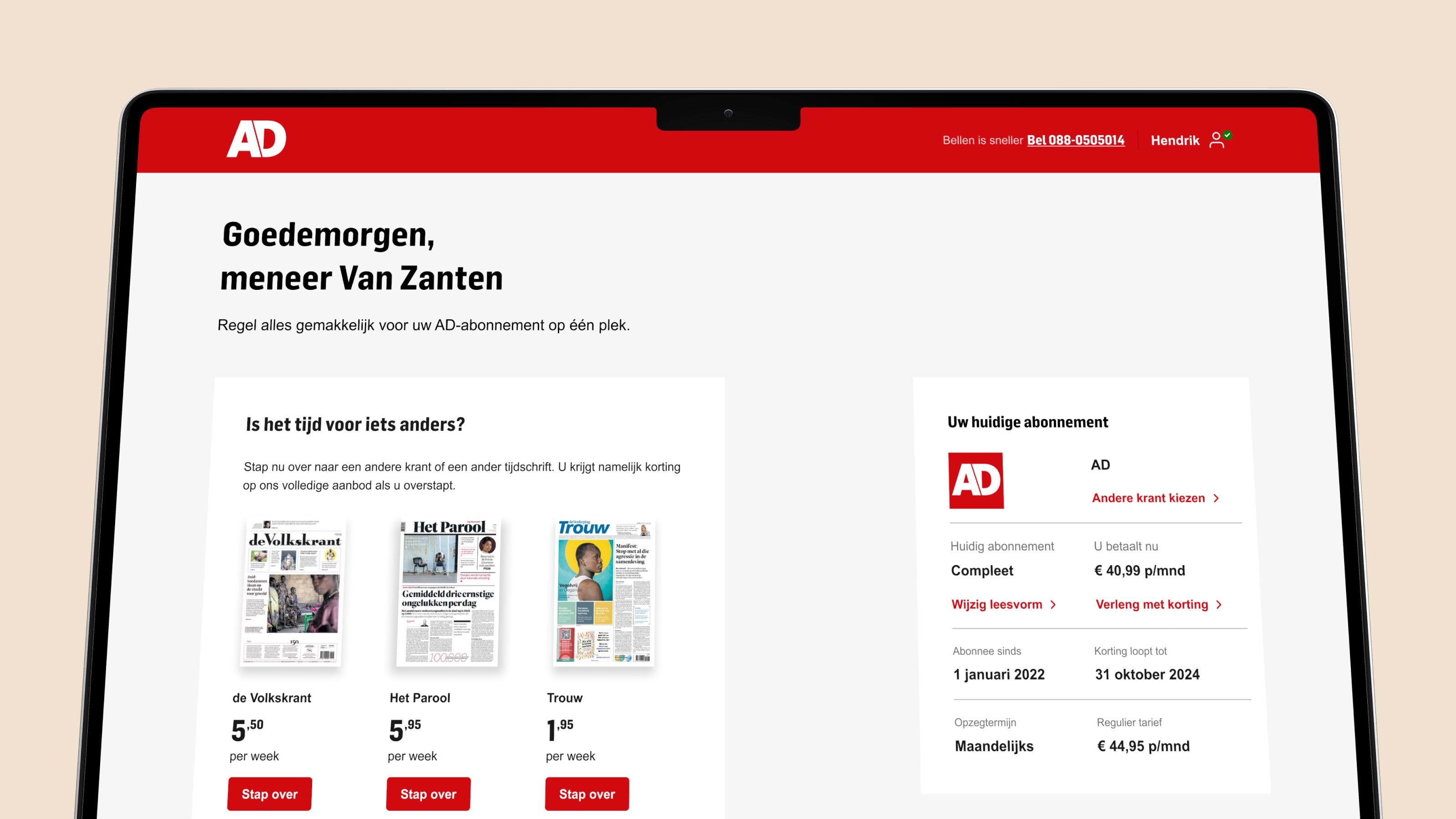
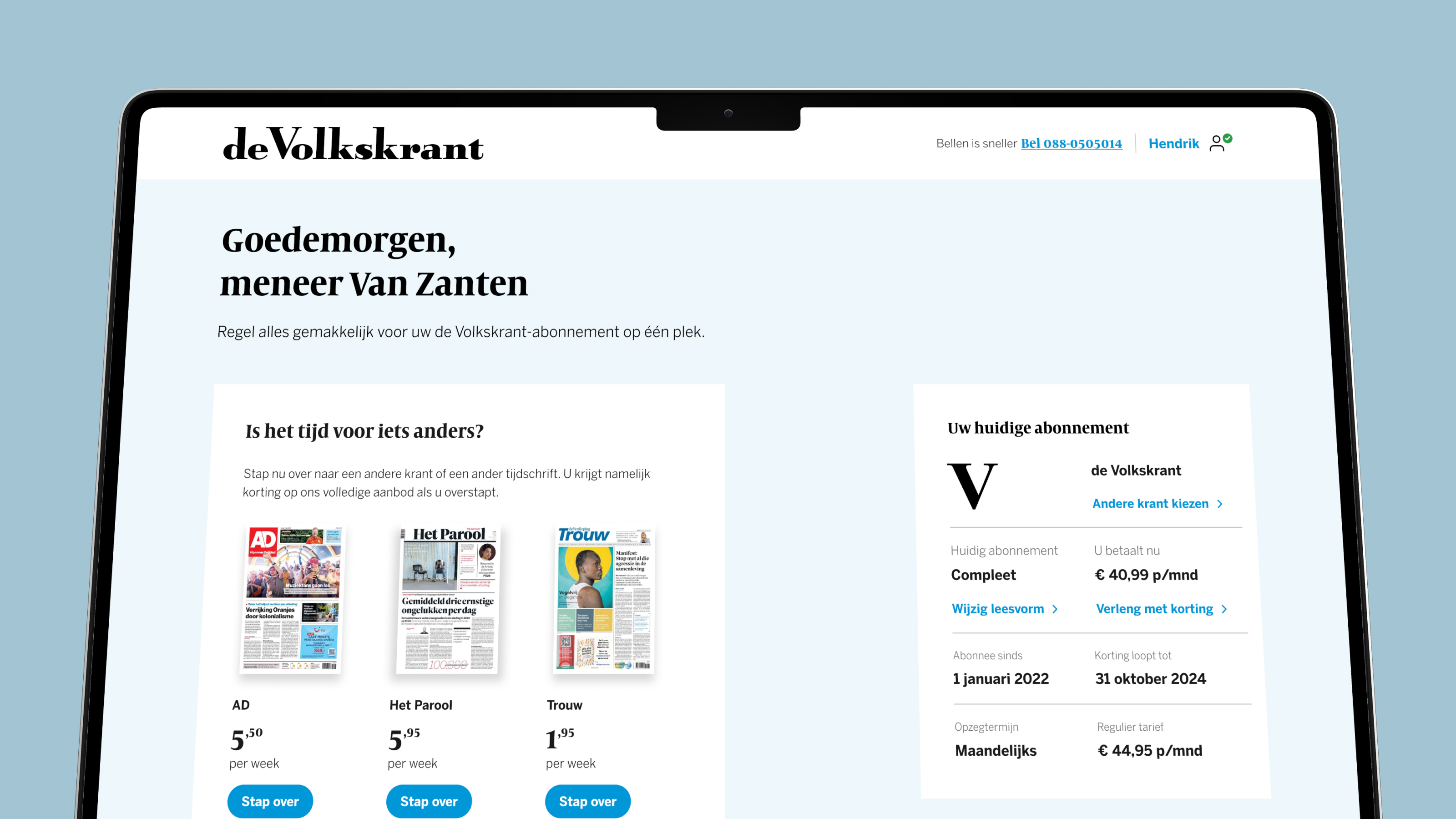
I rebuilt the journey from the subscription overview onwards. A clear, responsive dashboard now shows duration, price and next actions at a glance — replacing a desktop-only table where everything was a click away. Inside the cancel flow, the reason-for-leaving step triggers a relevant counter-offer instead of an exit. Customers chasing a lower price see other reading formats from the same title. Customers leaving entirely see matching titles from sister brands — a vtwonen reader stepping away might be offered Ariadne at Home or Libelle.

Underneath, it all runs on one component library. The same retention flow renders in AD's red, Volkskrant's serif black, Trouw's blue and Parool's identity — same logic, same accessibility baseline, every brand on its own terms. The design system isn't the case; it's what made the case shippable across thirty-plus brands without thirty-plus teams reinventing the flow.

Outcome

Customers see the right alternative at the right moment, on the device they're already holding. Conversion and retention improved across every brand the flow shipped to. The editorial teams kept their voice — the system never asked anyone to trade identity for shared components.
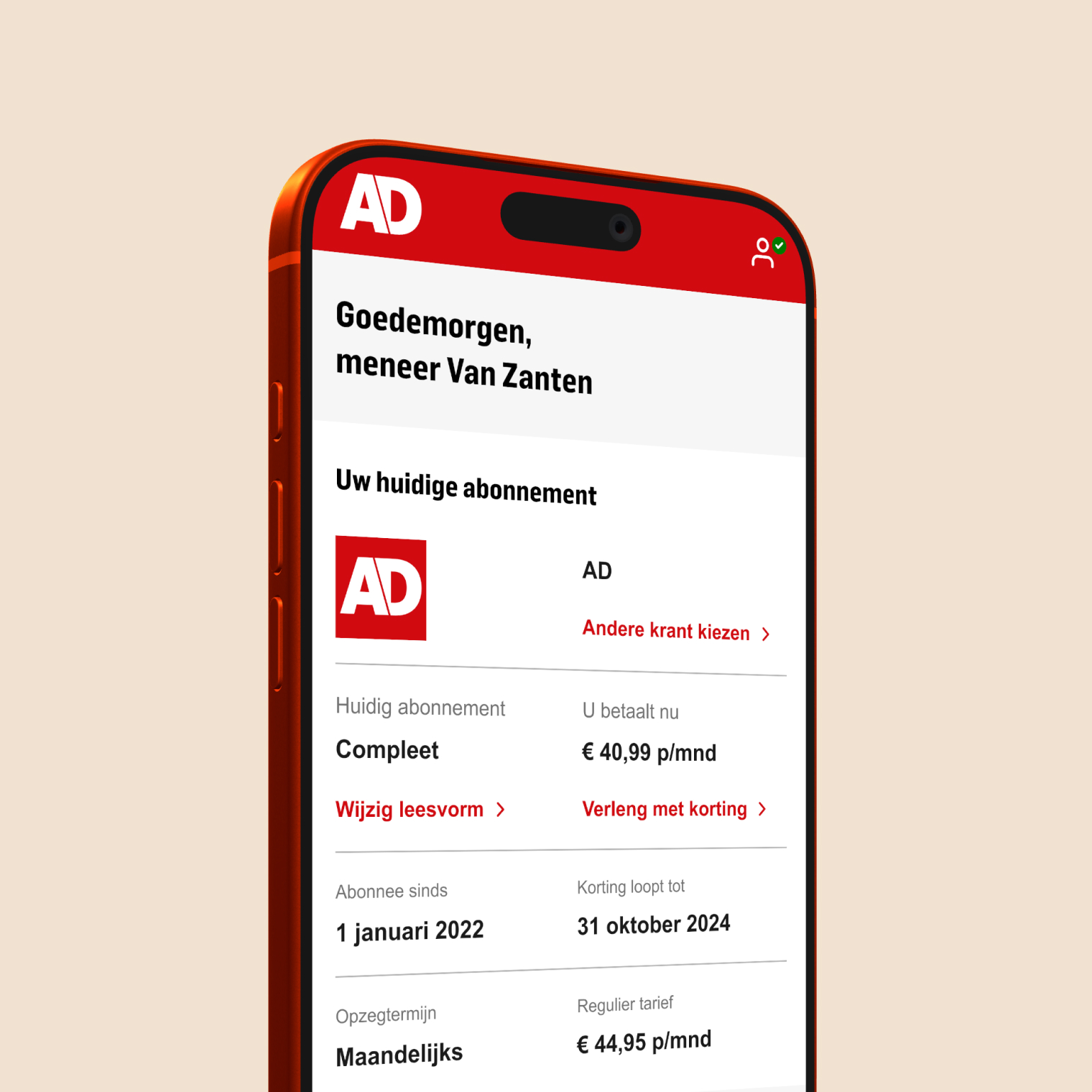
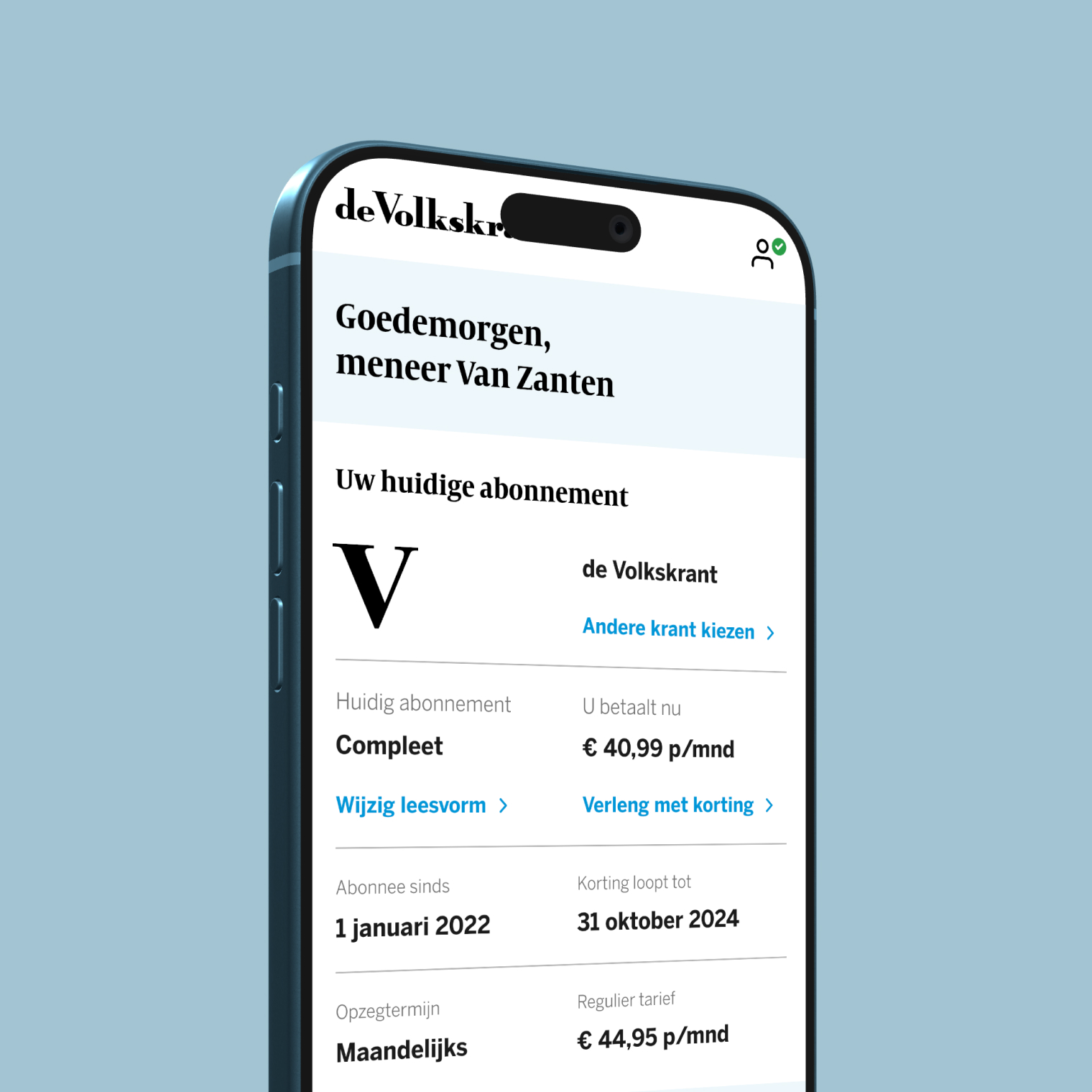
DPG case visual — AD DPG case visual — Volkskrant
02

Tele2 · T-Mobile

Two brands, one system

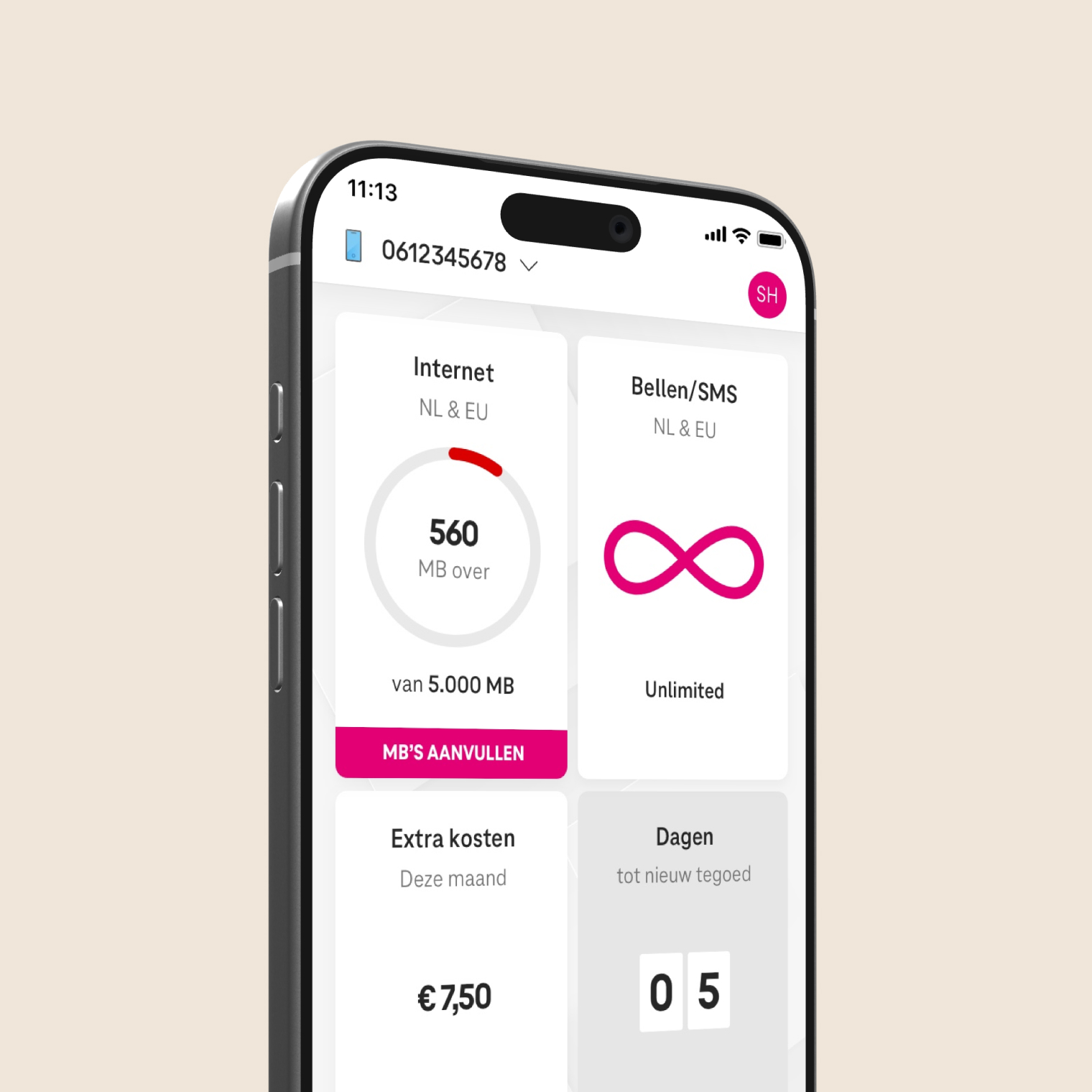
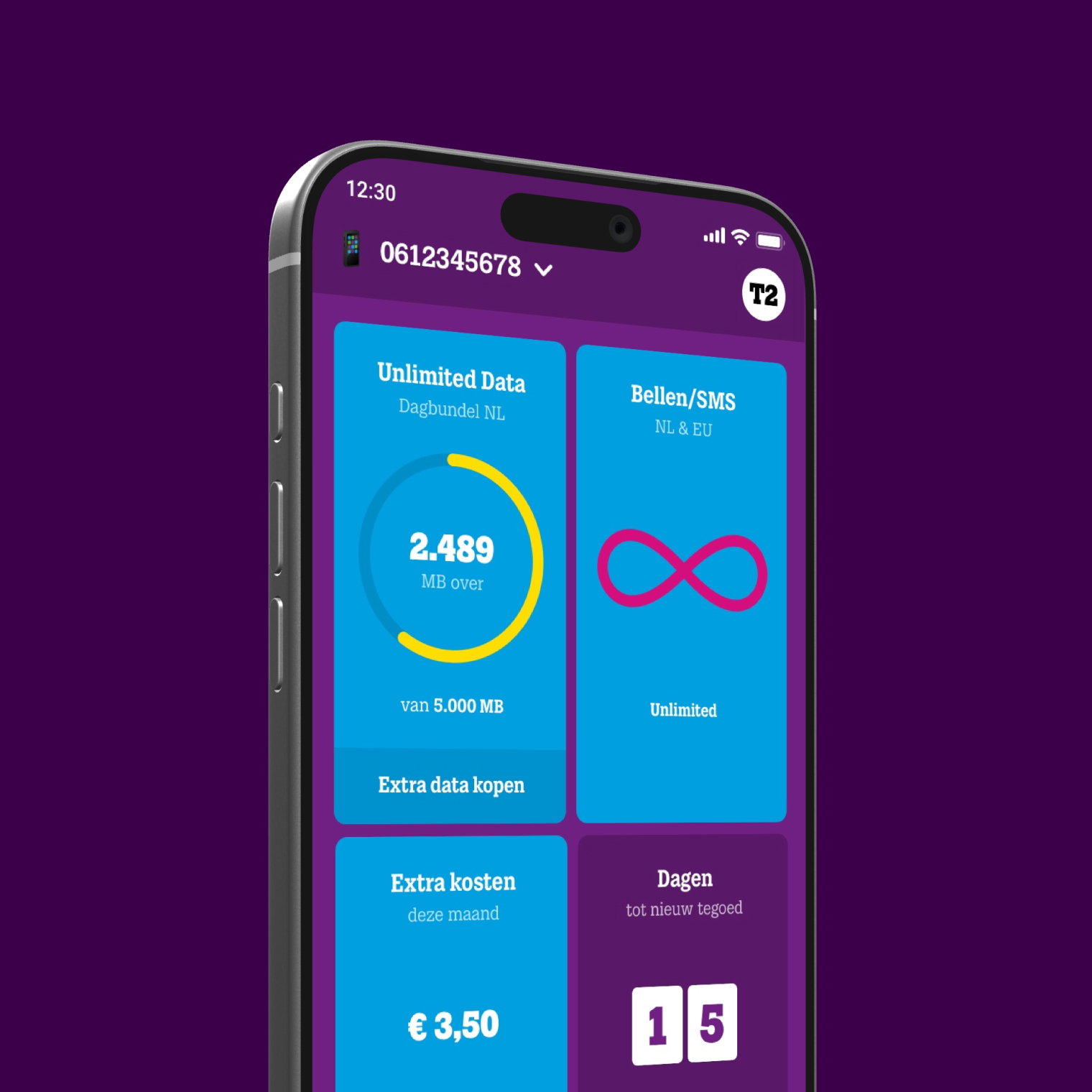
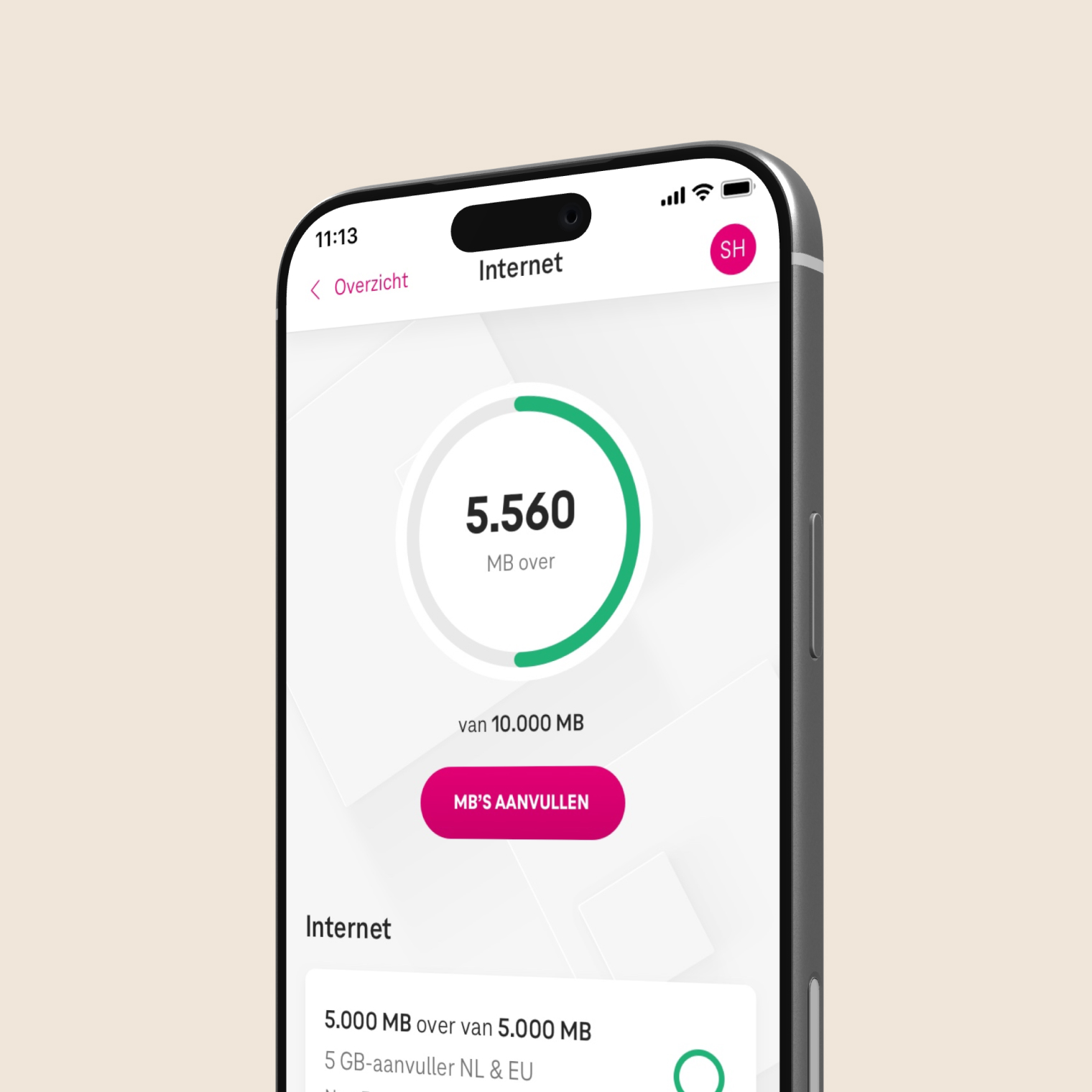
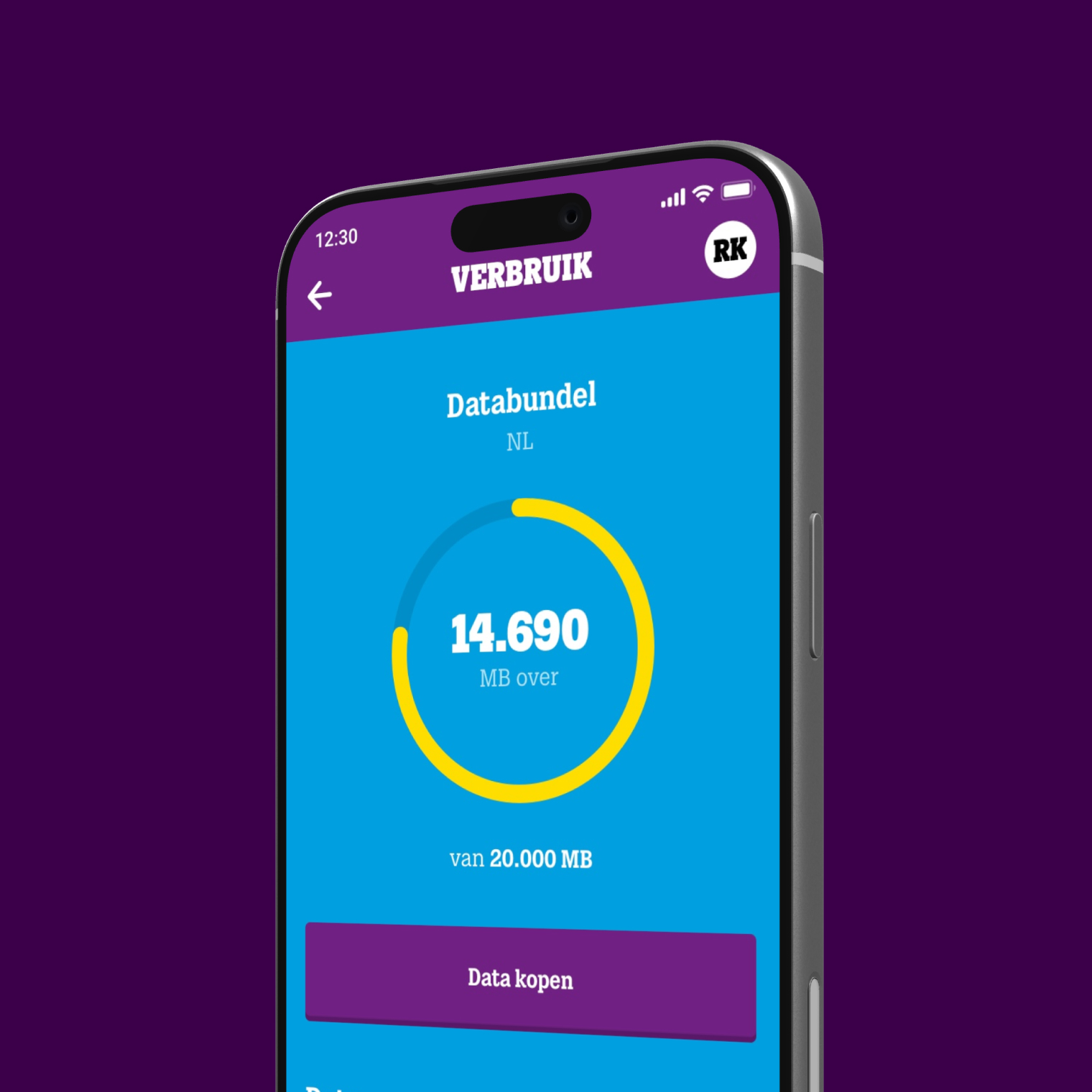
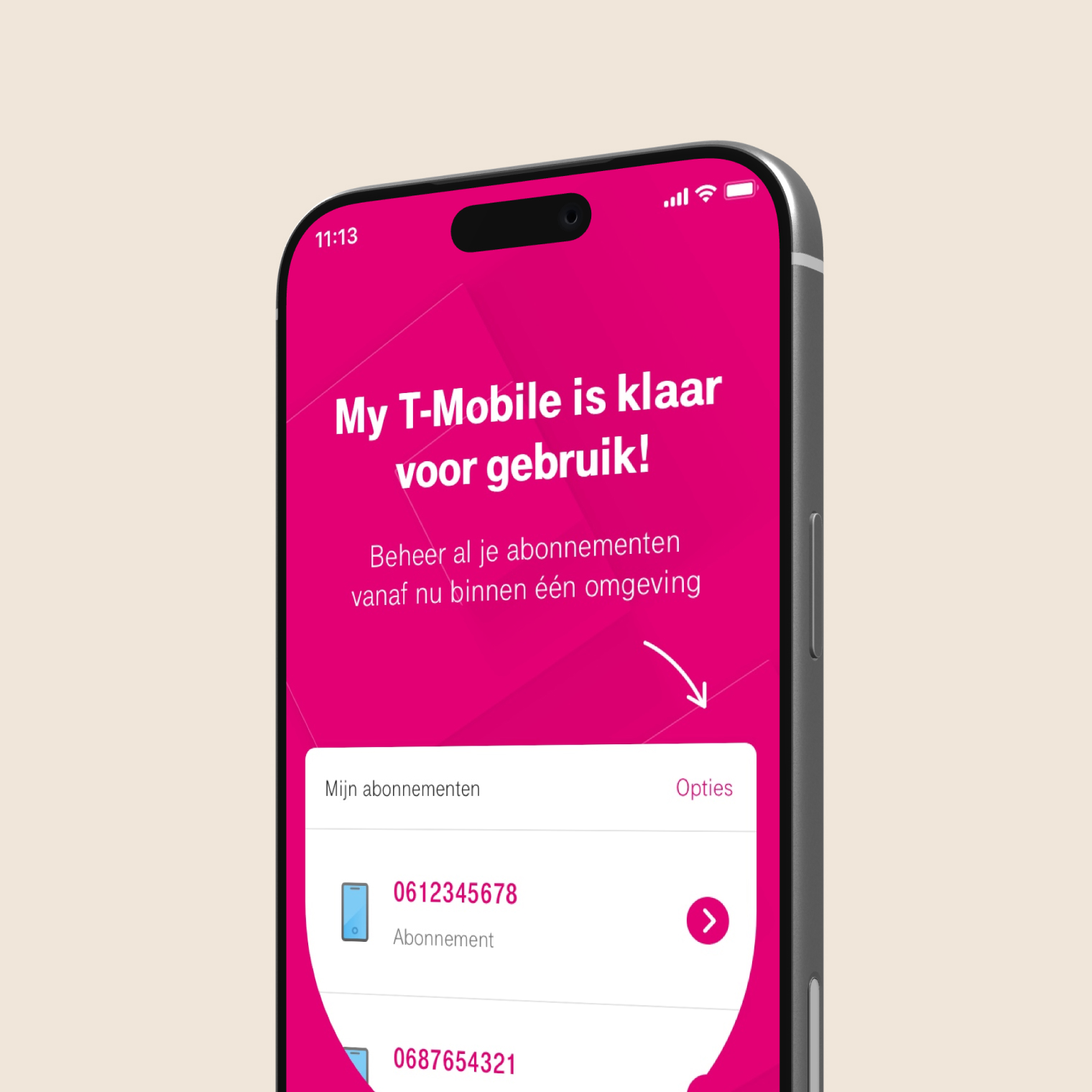
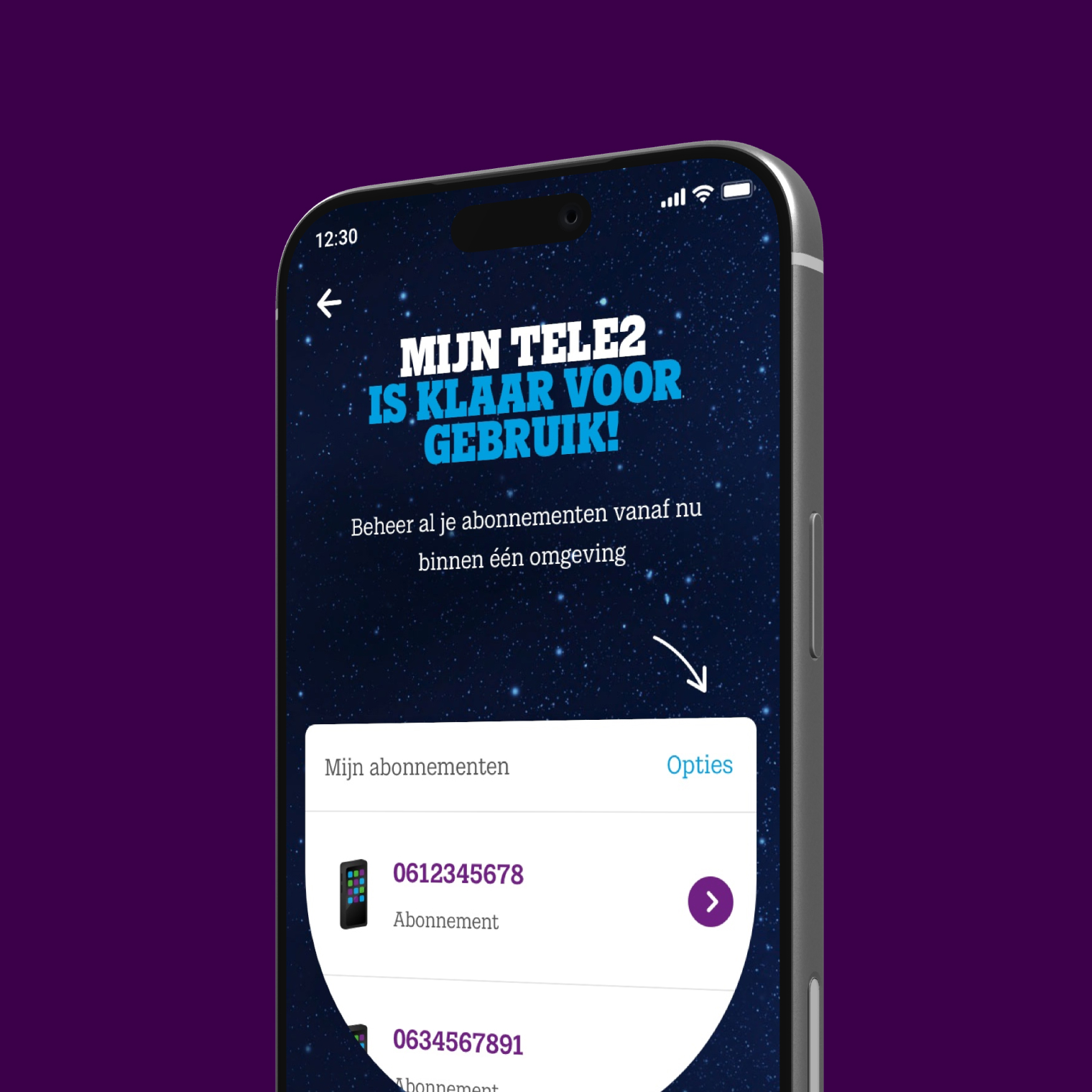
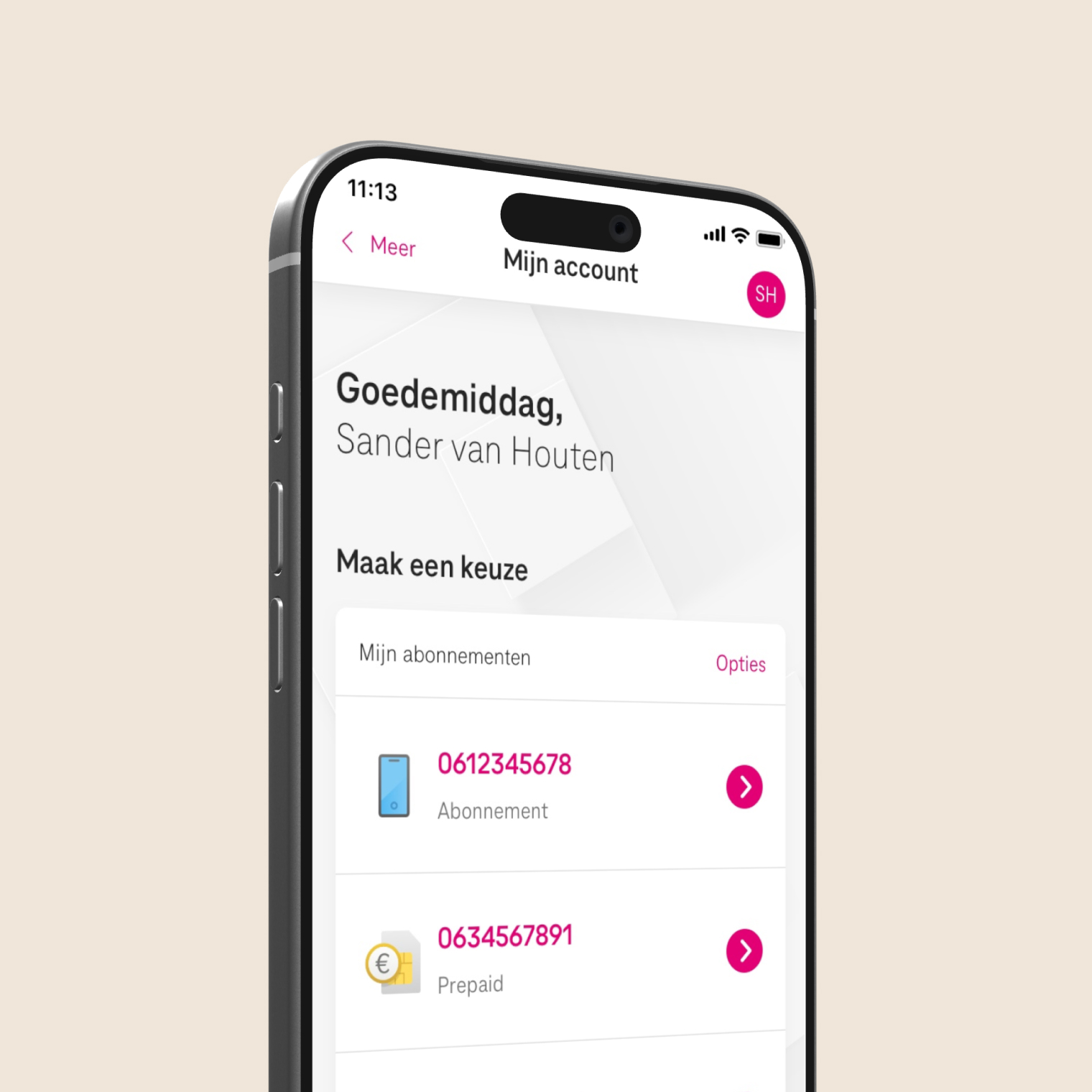
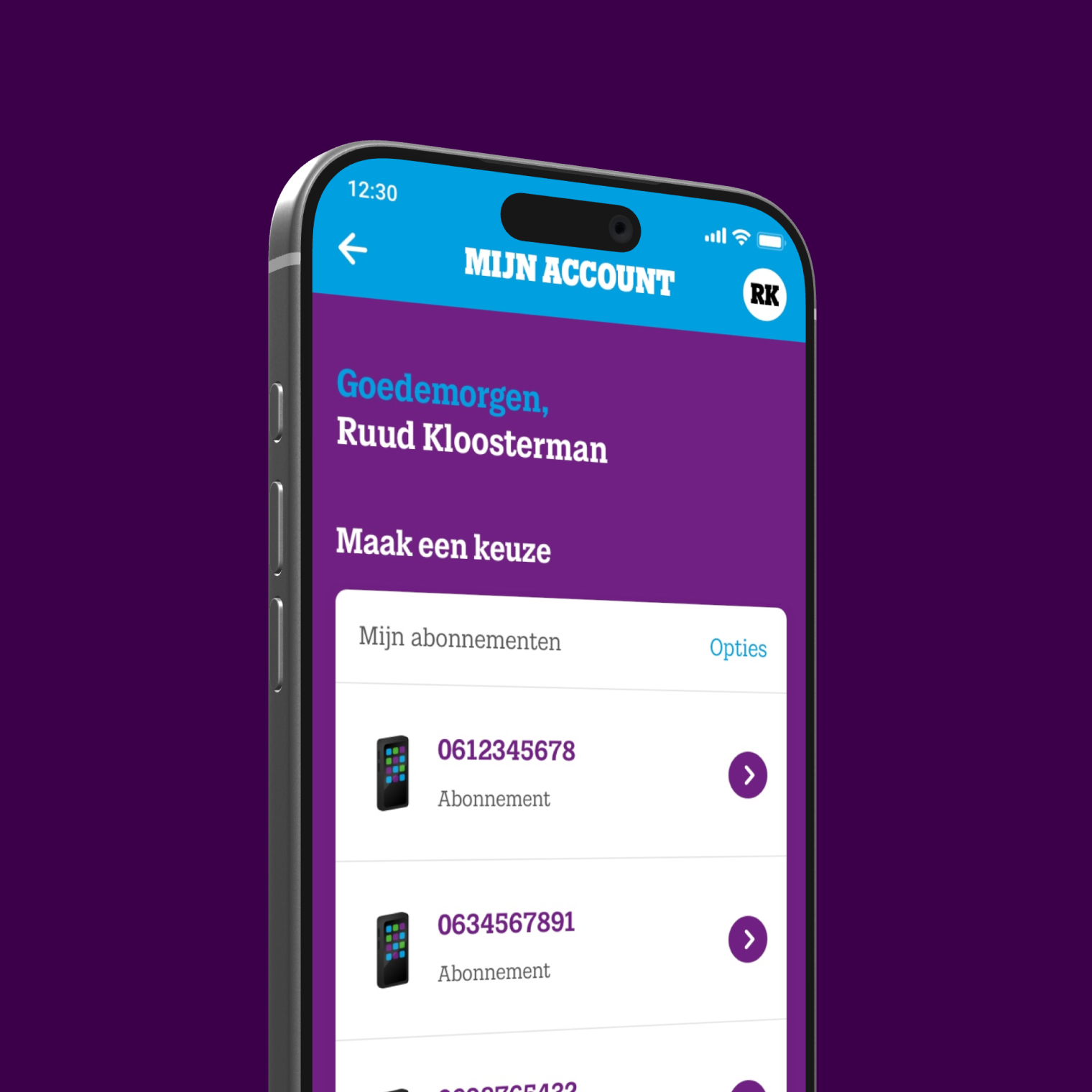
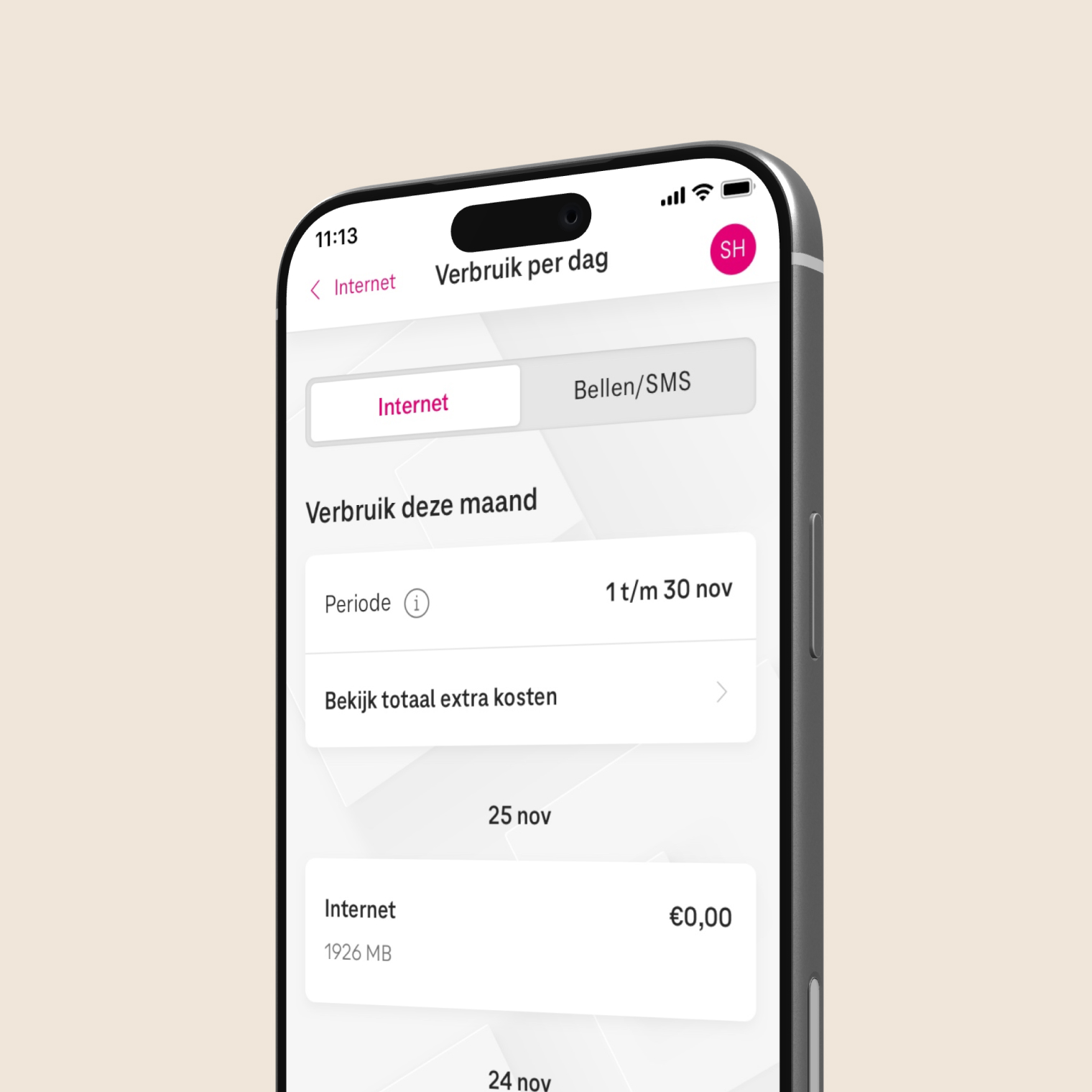
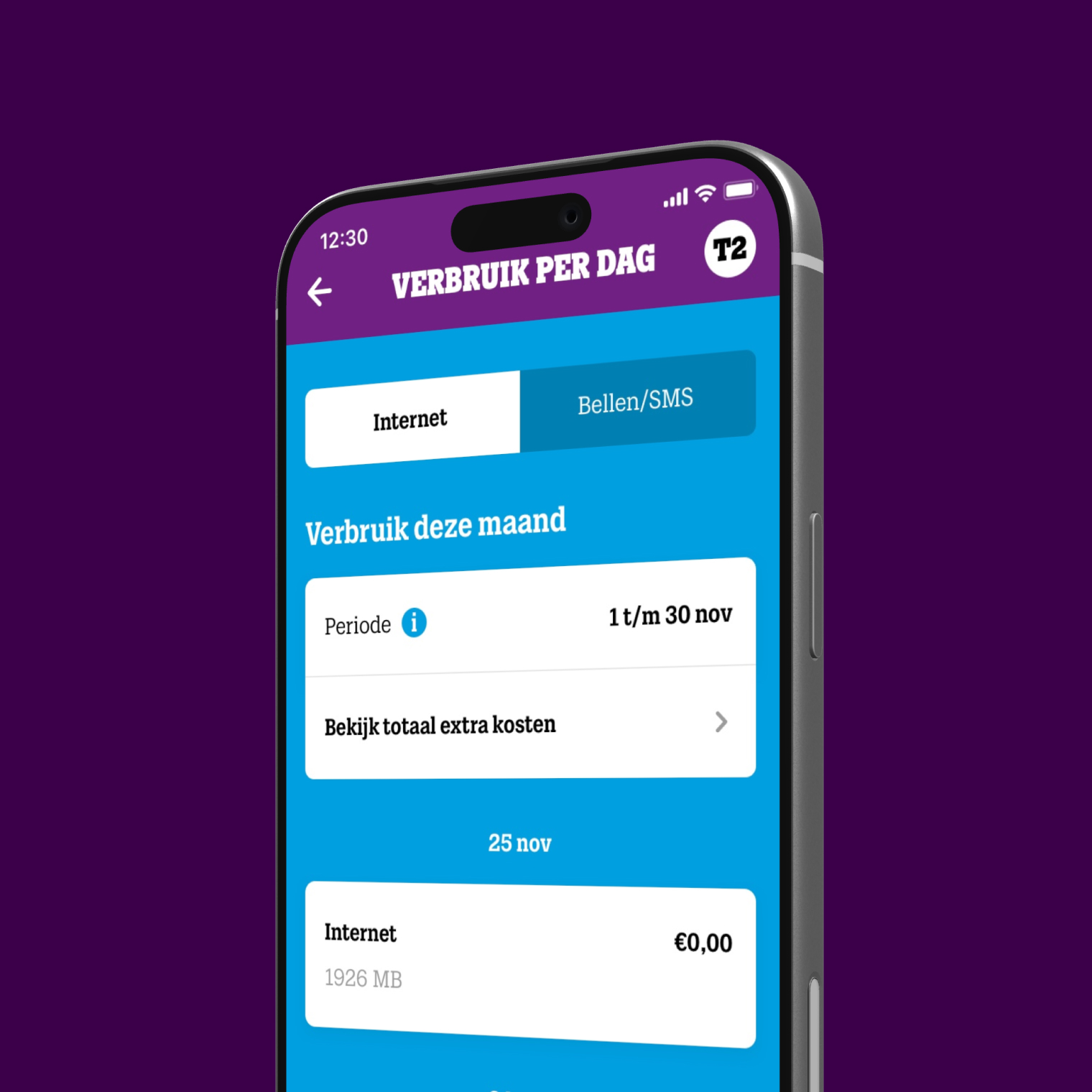
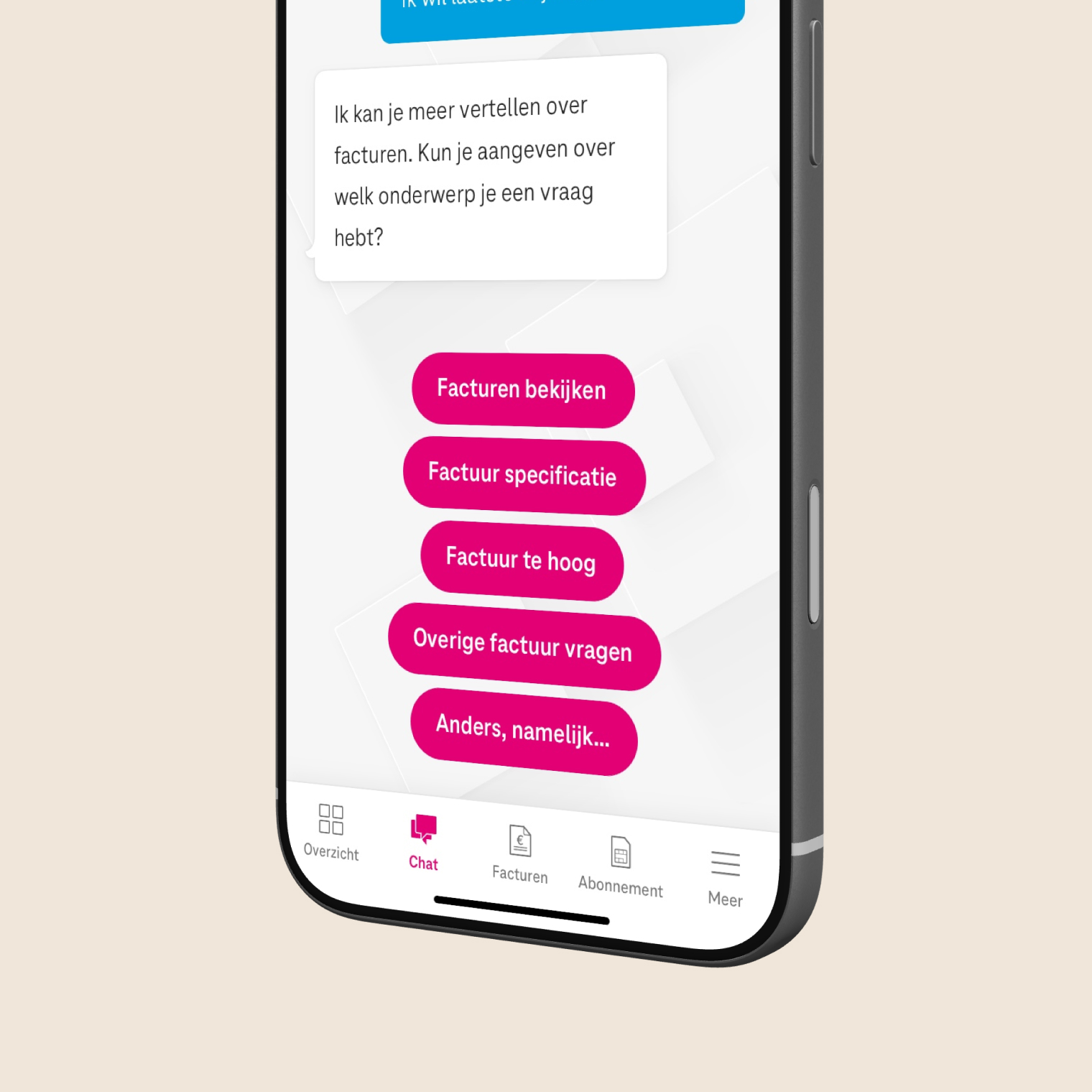
In January 2019, Tele2 became part of T-Mobile and both customer apps had to migrate onto a single platform. I led the redesign of My T-Mobile and My Tele2 for iOS and Android — two distinct brand experiences, one underlying system.

Context

The merger turned a technical constraint into a brand question. Both apps had to live on T-Mobile's stack, so the existing T-Mobile features set the baseline that the new Tele2 build had to match. The apps were comparable on paper, but the information architecture and UX differed in ways that mattered to each audience. Collapsing one brand into the other wasn't an option — both customer bases needed to keep what they recognised. The challenge was running one design system that could carry two brand identities without compromising either.

Approach

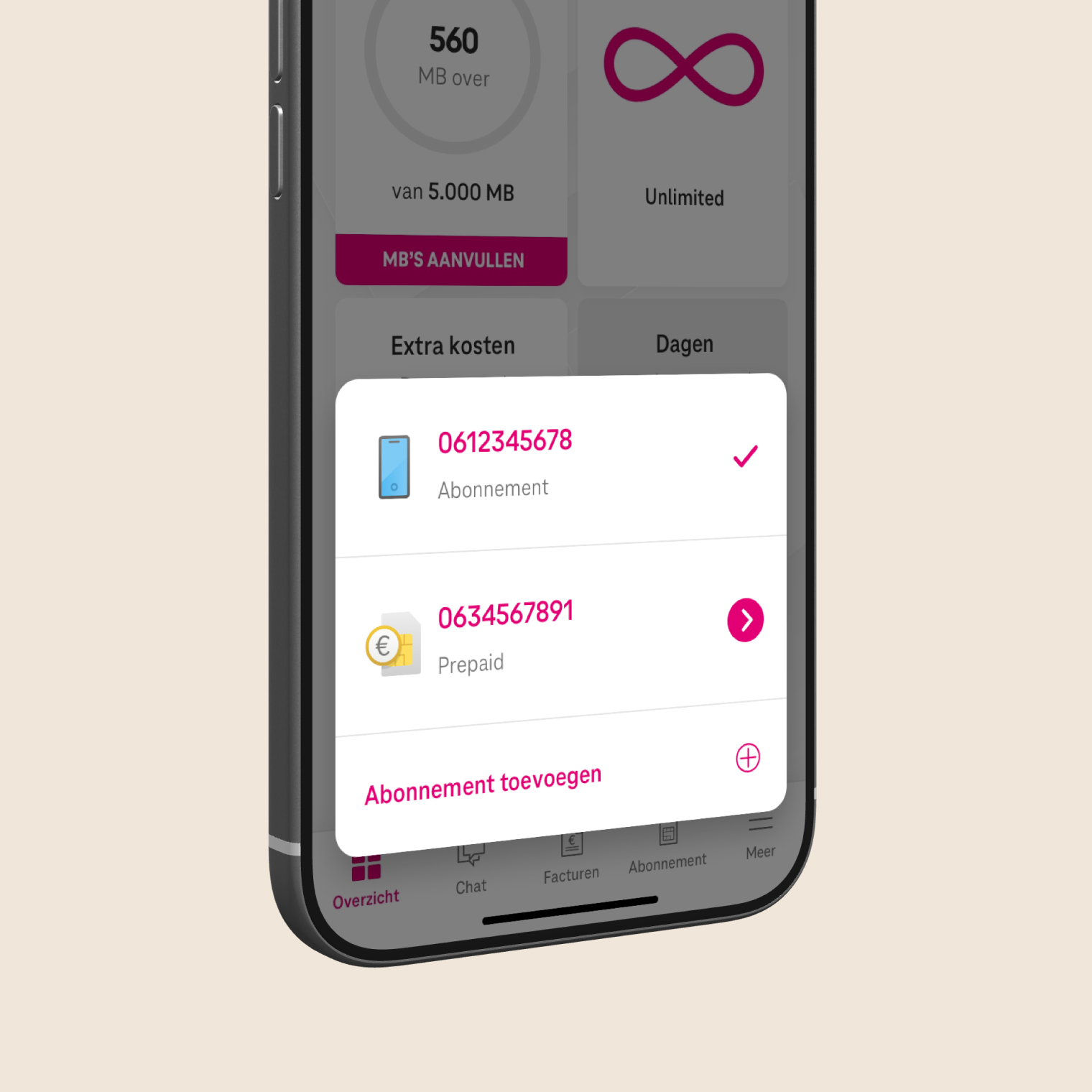
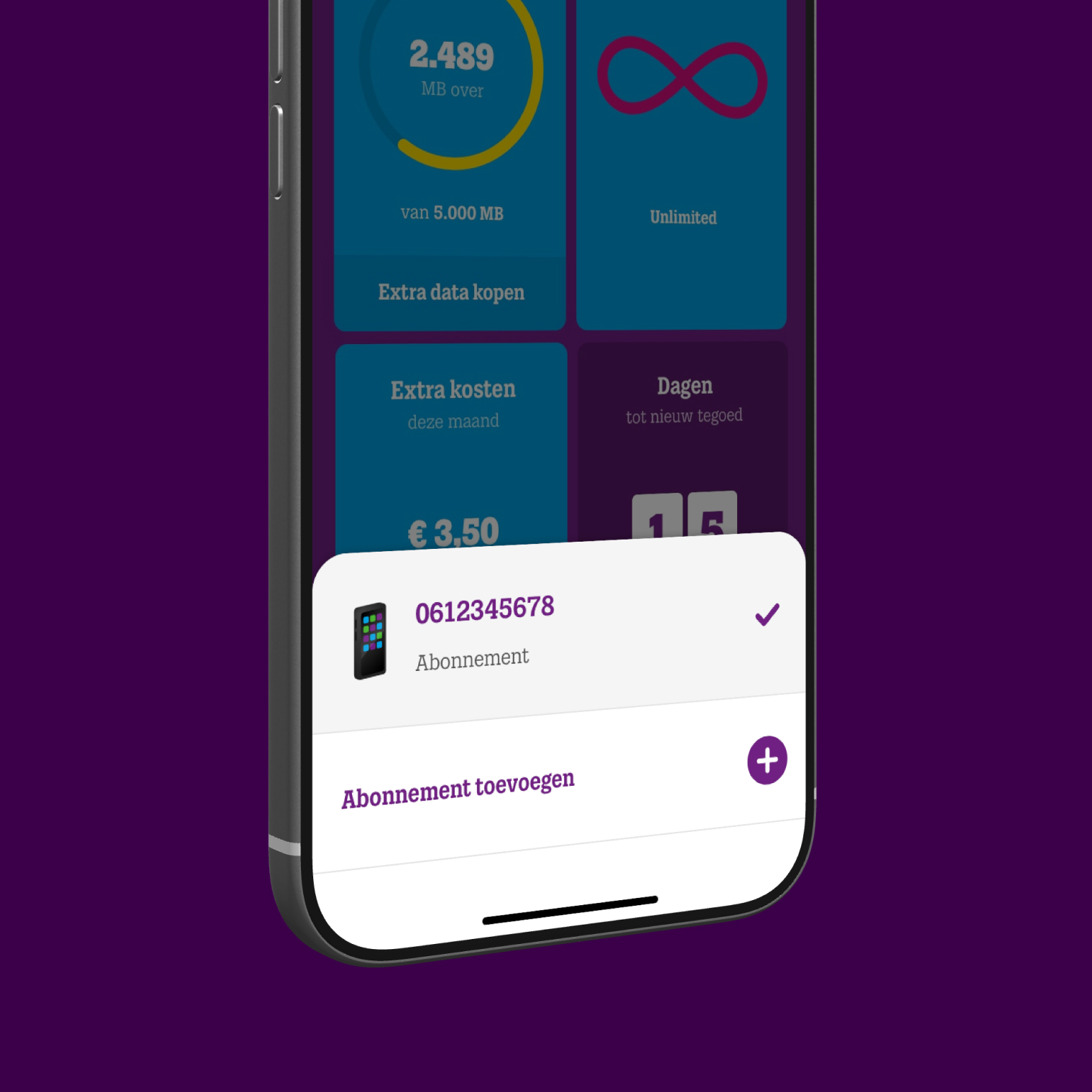
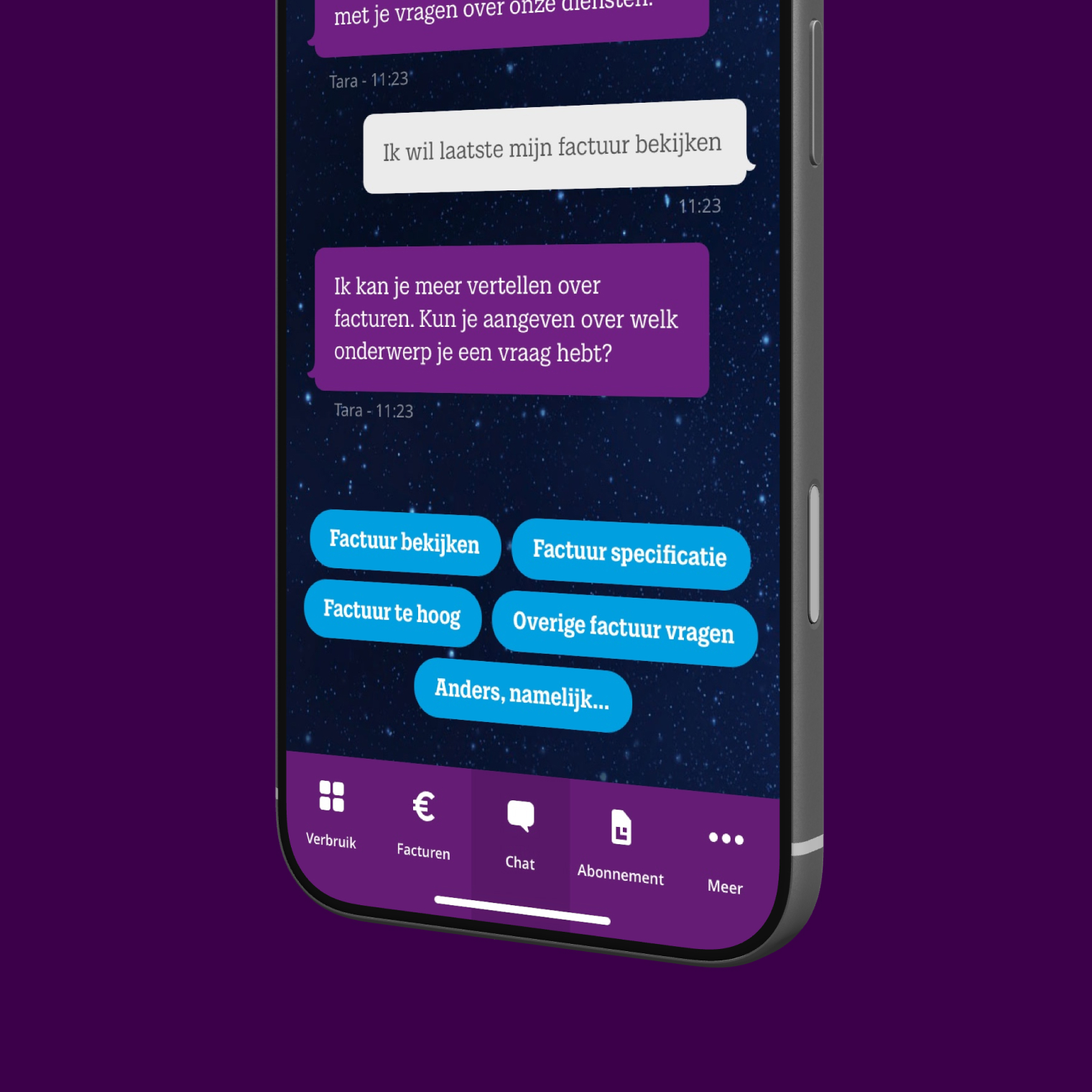
I started with information architecture. The new cross-platform app was structured in two layers — a Parent layer (Dashboard, Chat, Invoices, Subscription, More) for fast navigation from anywhere, and a Child layer underneath for managing details and purchases. Same skeleton, room for two content models.

From there I worked out every base screen as low-fidelity wireframes, then translated them into components. Each brand got its own App Design System, with components kept in lockstep with the existing Web Design System — the app had to feel of a piece with Mijn Omgeving on the web. The system kept evolving as the apps shipped, so brand consistency held up over time, not just at launch.
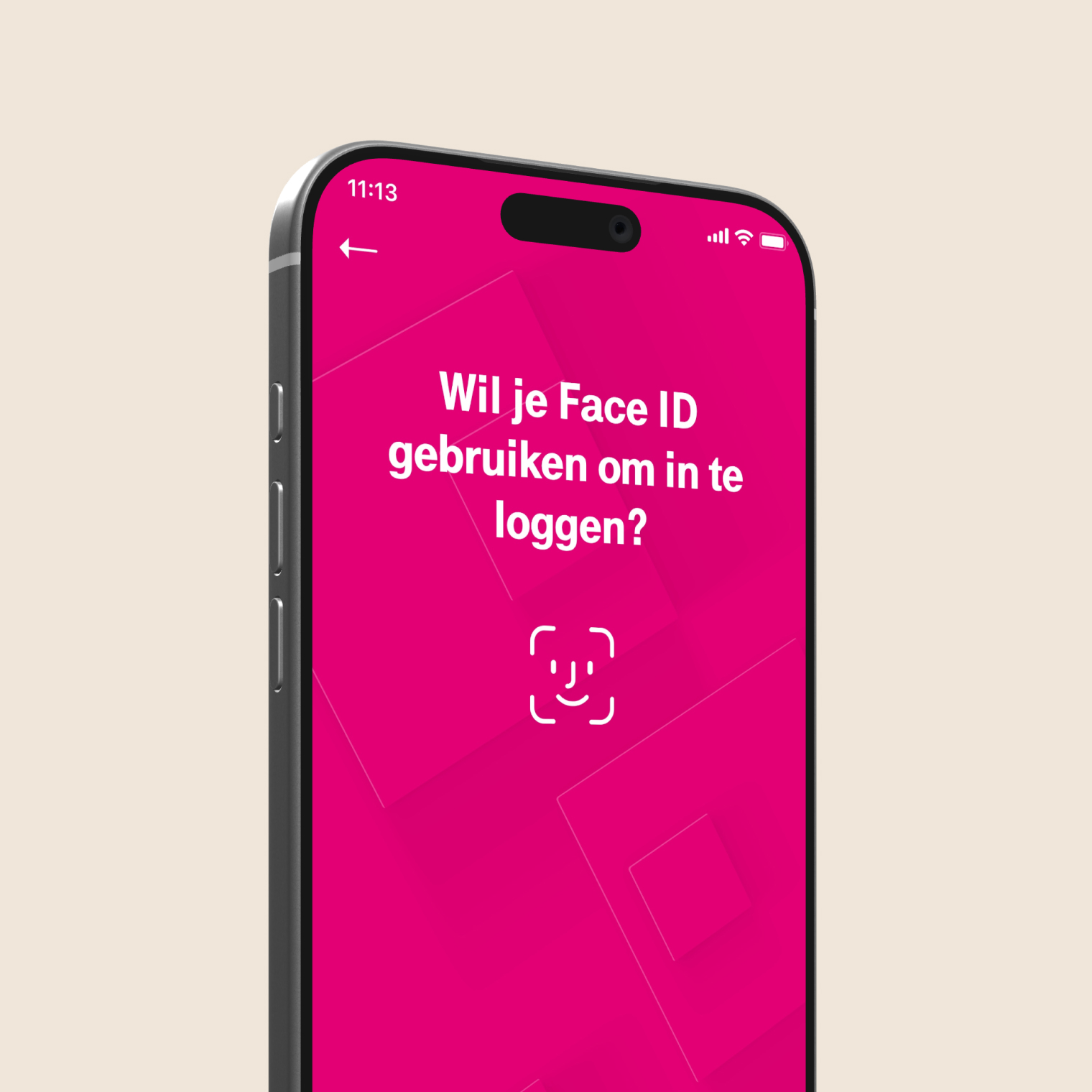
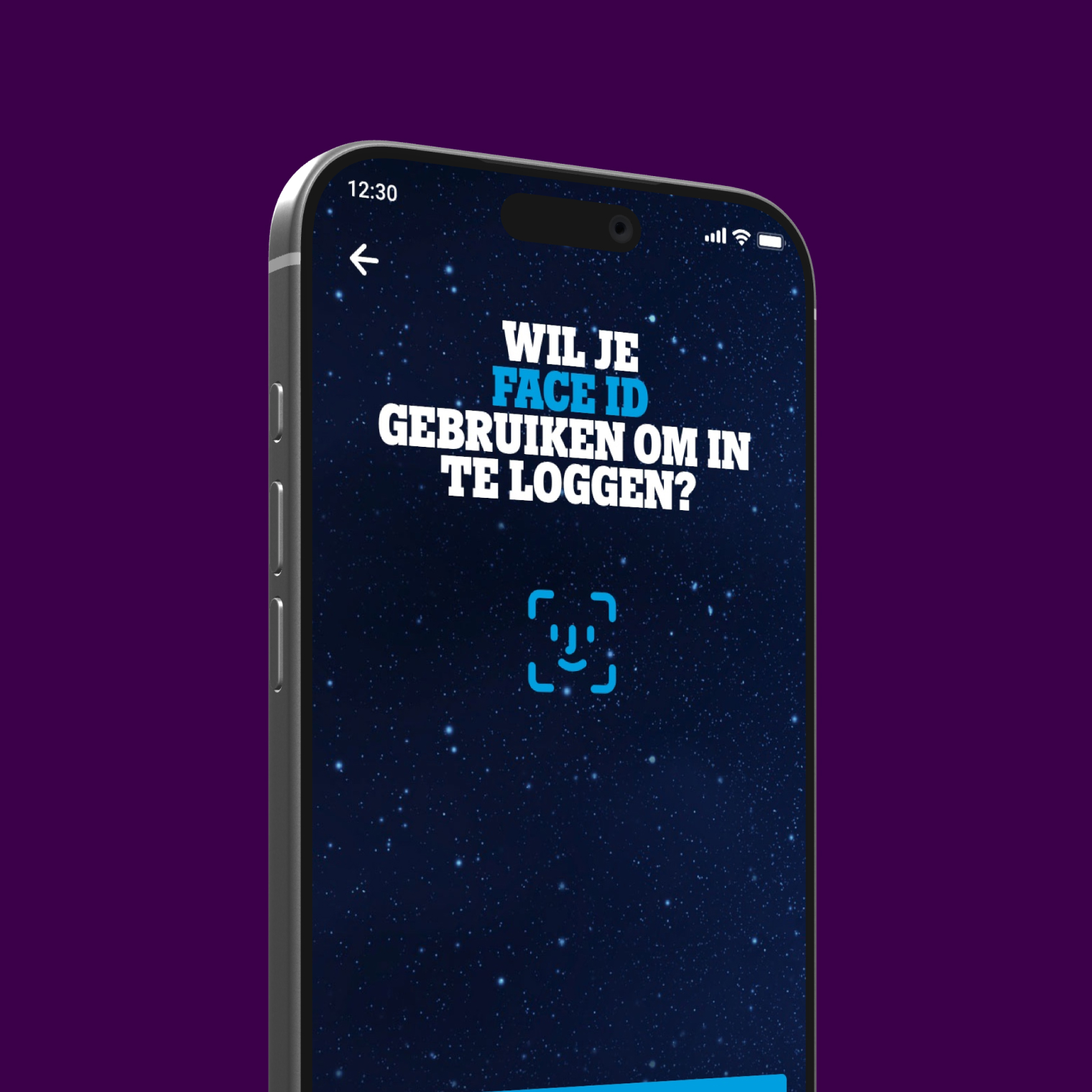
For complex flows — login, account creation, password recovery, account migration, and later two-factor authentication — I designed detailed user flows before any UI work started, then prototyped them for stakeholder review and developer handover. Key flows were validated through user testing, with findings folded back into the designs for both brands. The work ran alongside an international design and development team.

Outcome

Two distinct apps, one shared spine. My T-Mobile kept its bold magenta identity; My Tele2 kept its own visual language. Underneath, a consistent component model and IA made it possible to maintain both without doubling design and engineering effort. The App Design System became the default starting point for everything the apps shipped after the merger.

Telco case visual — T-Mobile Telco case visual — Tele2
03

Municipality of Rotterdam

Citizen apps, accessible by design

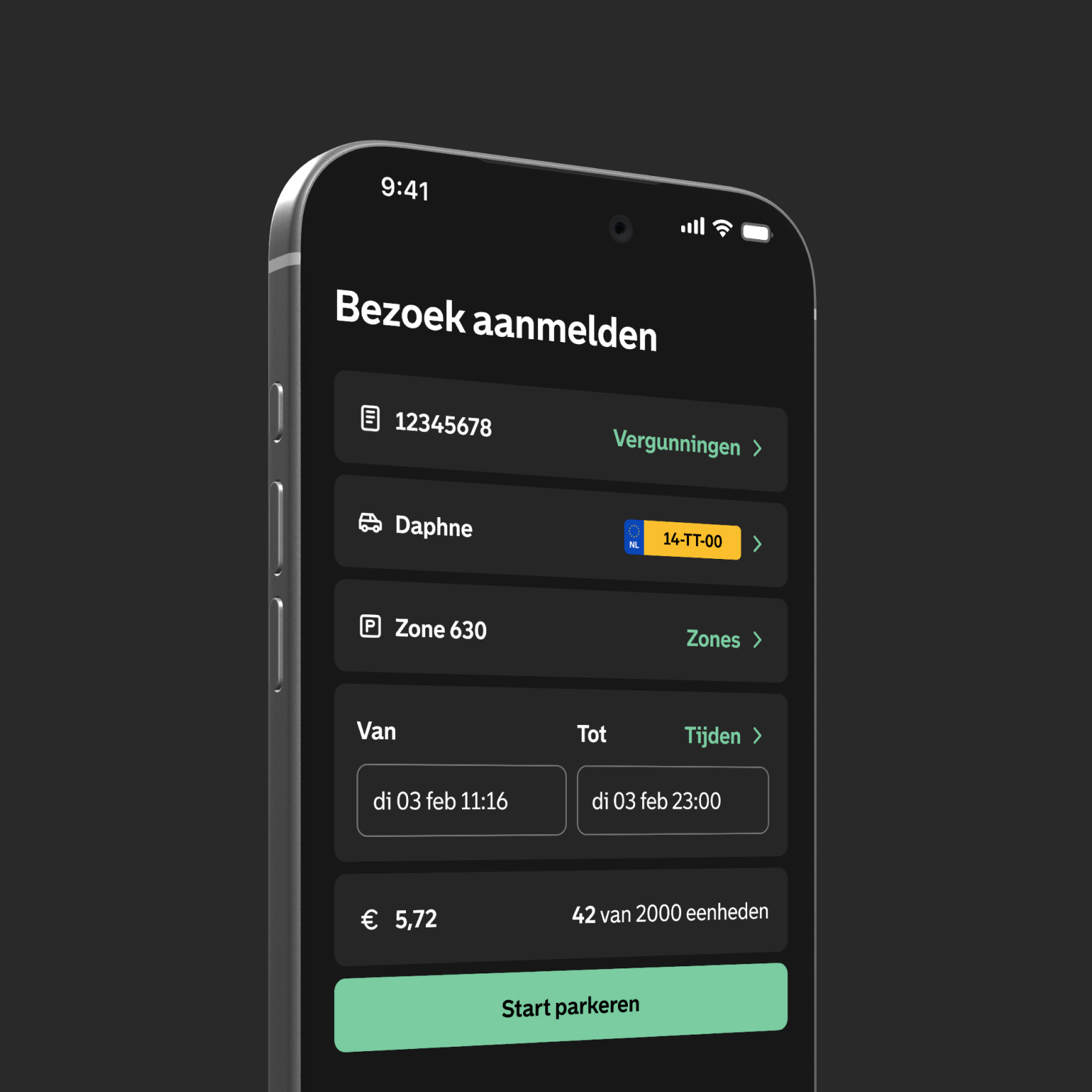
At the Municipality of Rotterdam I lead UX and UI design for citizen apps and internal tools. Most of the past year went into the Bezoekersparkeren app — the city's app for residents to register visitor parking — and into RODS, the design system that supports it.

Context

Public-sector software has a legal accessibility floor. WCAG 2.1 — the European accessibility standard for government digital services — sets the baseline: every screen has to work for residents using screen readers, larger text or higher-contrast settings, before it ships. There's no version with that work bolted on later.

Approach

I led the redesign of the Bezoekersparkeren app with two goals running in parallel: cleaner everyday flows for the residents who use it most, and full WCAG compliance from the first prototype. Contrast, focus order, hit-area sizes, dynamic type and screen-reader labels were checked at design time, not at QA.

In parallel I contributed to RODS — the Rotterdam Design System — focused on the native (mobile) component layer. The web side of RODS was further along; the mobile side needed catching up. I worked on accessibility-first defaults so the next team building a native screen wouldn't have to relearn the same lessons.

Part of that work uses an AI-assisted design system workflow — Claude paired with Figma's Console MCP — to check designs against accessibility rules and component tokens during design, not after handover. MCP is a way of giving an AI direct access to your design tool; in practice it means catching tokens, contrast issues and component mismatches in minutes instead of in review cycles.

Outcome

A redesigned Visitor Parking app, more usable and more accessible than what came before. A growing native-component layer in RODS that ships with accessibility as the default rather than an audit afterwards. And a working AI-assisted process for design-system work that's reshaping how the team approaches new components.
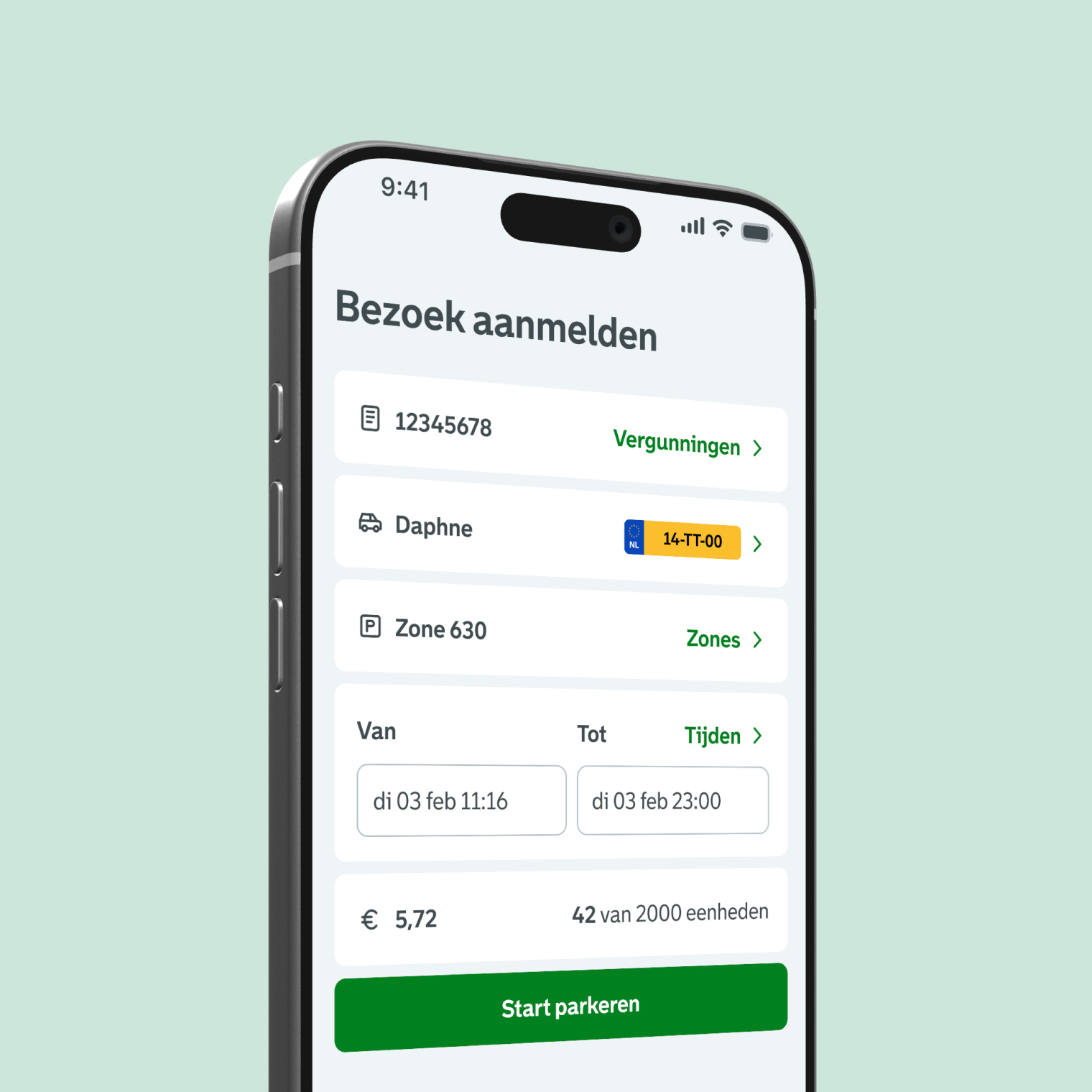
Municipality of Rotterdam case visual — Light Municipality of Rotterdam case visual — Dark